
From an Anker contract manufacturer to annual revenue of 2.1 billion yuan, collaborating with over 10,000 influencers in a single year—this energy storage brand is raking it in.
BLUETTI is a portable energy storage brand based in Shenzhen. Starting as an obscure ODM manufacturer, it rose to become the world’s fourth-largest portable energy storage device manufacturer in just five years, establishing itself as one of the “Big Four” in Shenzhen’s energy storage sector.
According to Frost & Sullivan data, in 2024, BLUETTI held a 6.6% market share by revenue and a 7.5% market share by shipment volume in the global portable energy storage market. As of December 31, 2025, its cumulative global shipments had exceeded 3.5 million units, with products sold in over 120 countries and regions, serving a cumulative user base of more than 3.5 million.
Its success is no accident, but rather the result of the synergistic implementation of three core strategies: precise market positioning, a closed-loop DTC omnichannel model, and in-depth localized operations.(We cordially invite you to try it out:AI YouTube Analytics & Leading Influencer Marketing Platform – NoxInfluencer)
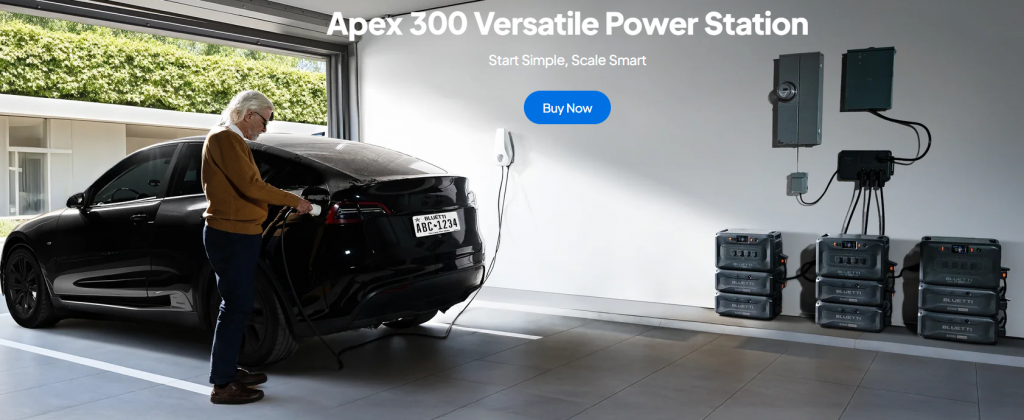
I. The Rise of the Brand: The Key to Transitioning from Contract Manufacturing to Brand Ownership
Its parent company, Delaminghai, was founded in 2013. In its early years, it served as an ODM manufacturer for brands such as Anker Innovation, Belkin, and Romoss, accumulating core technologies in inverters, BMS (Battery Management Systems), and photovoltaic inverters.
In 2019, the impact of the pandemic led to a sharp decline in ODM orders, prompting the company to decisively pivot. By the end of 2019, it had registered the BLUETTI trademark in the United States.
In 2020, it launched its first proprietary product, the AC200, on the Indiegogo crowdfunding platform, raising $6.73 million in 48 days—620 times its original goal—and instantly gaining global recognition.
BLUETTI strategically targets high-value scenarios while actively avoiding the industry’s low-end price wars. It focuses on four high-average-order-value segments—outdoor camping, home emergency preparedness, RV travel, and off-grid operations—and has built a comprehensive product portfolio based on a strategy of high power, all-scenario coverage, and ecosystem integration.
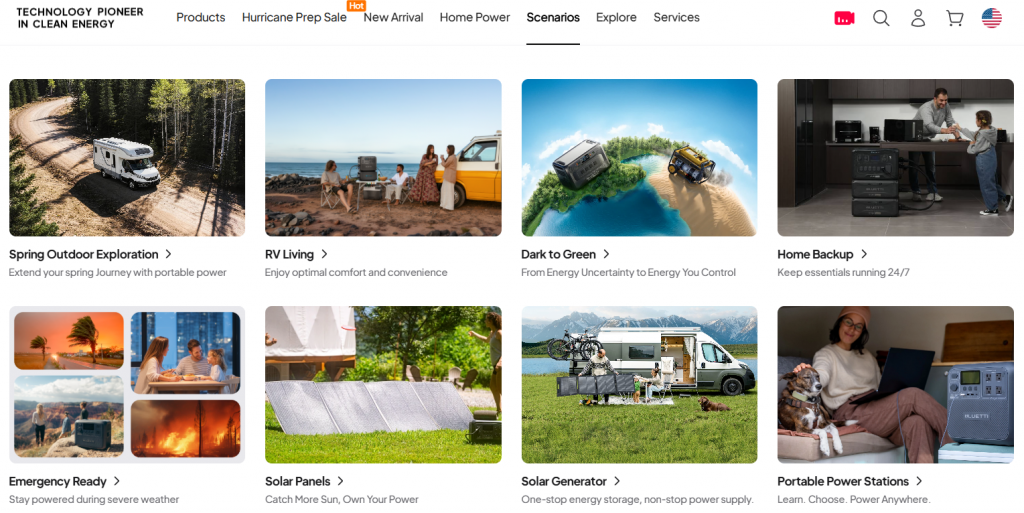
Its AC200 model was the first to raise product specifications to 2000Wh/2000W, capable of powering high-power devices such as air conditioners, induction cookers, and electric vehicles. This move allowed the product to break free from the low-end positioning of traditional portable energy storage—often likened to “oversized power banks”—while simultaneously implementing a refined segmentation of usage scenarios through models like the EB3A and AC180 portable series to cater to lightweight outdoor and short-distance road trip needs, while high-power models like the AC300 and AC500 target the high-end markets for RVs and home backup power, with an average order value exceeding $3,000.
Furthermore, the brand has expanded its product portfolio to include batteries, solar panels, and smart app controls, creating a closed-loop ecosystem of energy storage units and accessories. This effectively boosts customer repurchase rates, far exceeding the industry average.
II. DTC Omnichannel Closed-Loop: Building a Growth Flywheel
BLUETTI has established an omnichannel system comprising “a dedicated brand website as the core, third-party platforms, offline retail, and local services,” creating a closed-loop process that drives traffic and conversions:
(1) Brand Website: The brand’s core platform, with monthly sales exceeding $10 million
BLUETTI positions its brand website as the cornerstone of its global operations. Since 2021, the company has launched dedicated websites in 14 countries and regions, comprehensively covering key overseas markets such as the U.S., Europe, Australia, and Japan. With monthly sales consistently surpassing $10 million, the brand website has become the primary driver of revenue, successfully reducing reliance on traffic from third-party platforms.
Simultaneously, by leveraging scenario-based content, technical knowledge sharing, and real-user case studies for SEO and content marketing, the brand continues to attract high-quality organic traffic from Google.
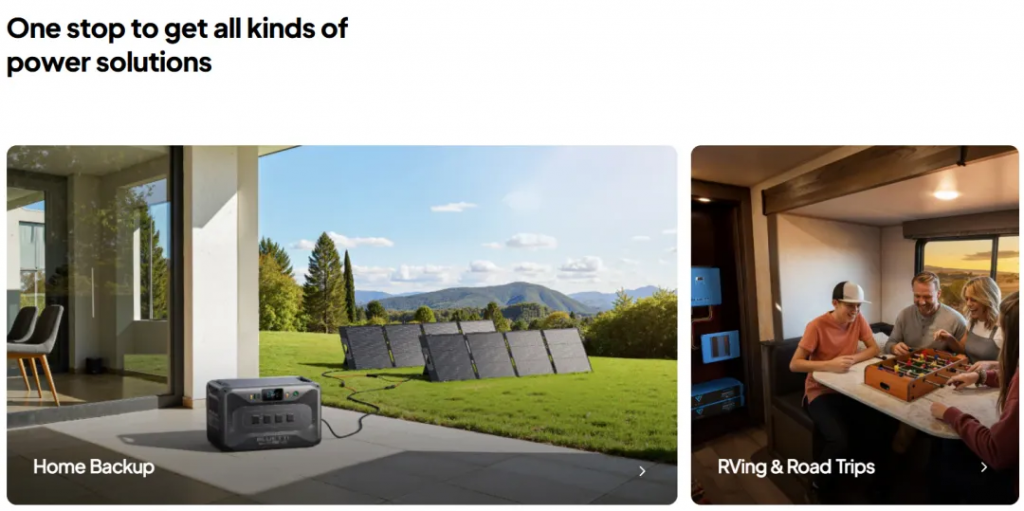
(2) Online-Offline Integration: Omnichannel Reach and Enhanced Trust
BLUETTI adheres to an omnichannel strategy that deeply integrates online and offline channels, enabling user engagement across all scenarios and significantly boosting the brand’s credibility overseas.
Online, the company has actively established a presence on major third-party e-commerce platforms such as Amazon and Walmart, setting up brand-owned online stores to comprehensively cover key overseas online shopping destinations and expand sales channels;
Offline, the company has successfully entered global retail giants such as Costco, Home Depot, and Best Buy, as well as over 1,000 physical retail stores. By leveraging the brand endorsement and in-store experience advantages of these leading offline retail channels, BLUETTI has successfully expanded from the niche outdoor energy storage market into the mainstream consumer market, further amplifying its brand influence and market reach.
(3) Localized Services: Addressing After-Sales Pain Points and Enhancing User Loyalty
BLUETTI places high priority on building a localized service system overseas to effectively resolve cross-border after-sales challenges and continuously strengthen user loyalty;
The brand has established 22 professional service centers and 30 subsidiaries worldwide, building localized marketing, operations, and professional after-sales teams. Simultaneously, it has optimized its overseas warehousing and distribution network to enable rapid product delivery. By providing localized warranty services and one-on-one technical support to local consumers, BLUETTI fundamentally resolves industry pain points such as difficult after-sales service and slow response times associated with cross-border shopping, significantly enhancing the consumer experience and brand loyalty among overseas users.
III. Localized Marketing: Capturing the Hearts and Minds of Users
BLUETTI has moved away from traditional advertising, instead building a marketing system centered on social media content and niche influencers to precisely target outdoor and tech enthusiasts in Europe and the U.S.
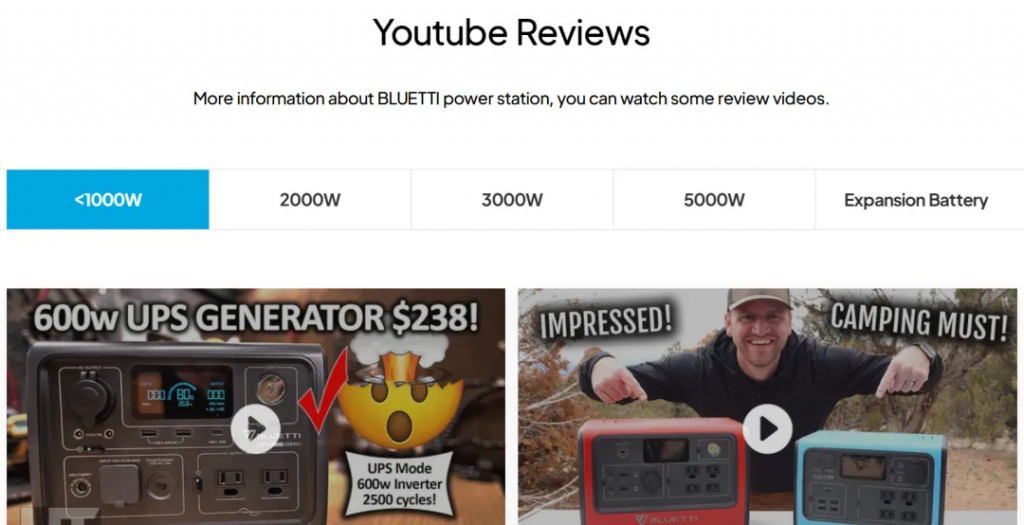
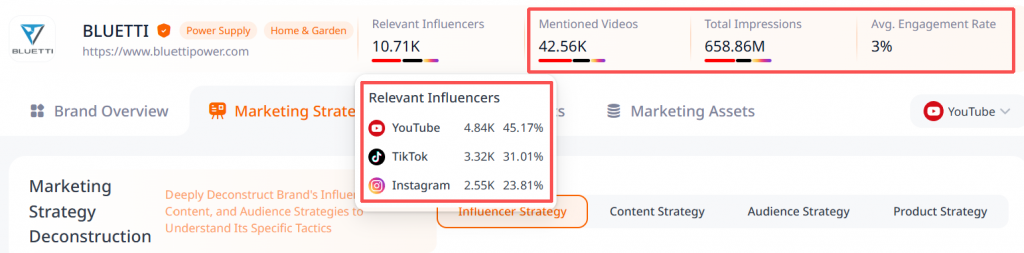
According to data from the Noxinfluencer platform, BLUETTI collaborated with 10,700 influencers within a year (with the largest number on YouTube), generated over 42,600 videos mentioning the brand, and achieved a total of 659 million impressions.(We cordially invite you to try it out:AI YouTube Analytics & Leading Influencer Marketing Platform – NoxInfluencer)
The brand adopted a scalable, tiered influencer marketing strategy. Rather than relying on a handful of top-tier influencers, it achieved comprehensive coverage through a network of tens of thousands of influencers, using a massive volume of content to penetrate user circles and build a brand perception of being “everywhere.”
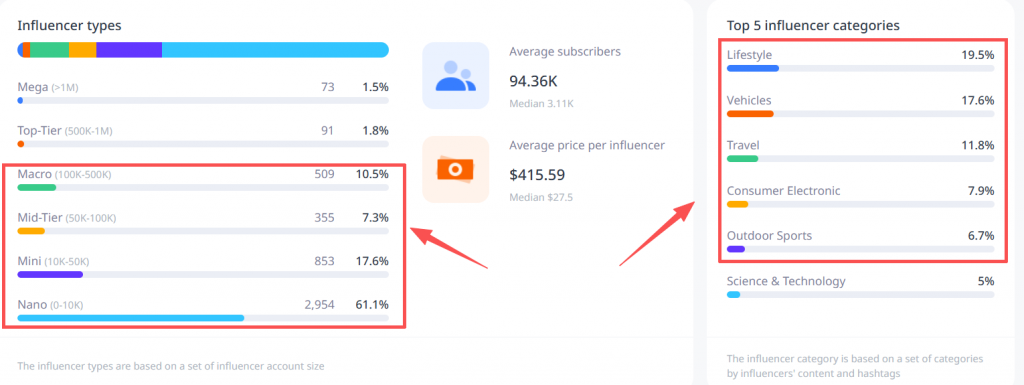
Micro-influencers account for as much as 61.1% of BLUETTI’s collaborations, while small-scale influencers make up 17.6%; together, they represent nearly 80% of the brand’s partnerships, making them the absolute backbone of its influencer strategy.
For brands expanding overseas, micro-influencers not only offer low entry barriers and controllable costs, but also tend to have higher fan loyalty and content authenticity. This makes it easier for overseas users to let down their guard against “advertisements” and view the products as genuine lifestyle shares from real users.
Although BLUETTI still faces challenges such as profitability pressures and intensifying competition, its transformation from an ODM manufacturer to a global energy storage brand fully demonstrates that Chinese brands can establish genuine brand competitiveness in the global market as long as they adhere to precise positioning, a closed-loop DTC omnichannel strategy, and in-depth localized operations.
