
After securing investment from Anker and reaching annual sales of 500 million, this fishing tackle brand is raking it in!
They say fishing is just a casual hobby, but they upgrade their gear more frequently than anyone else and can sit by the river from dawn till dusk—this is the daily routine of fishing enthusiasts, and it’s also the daily routine of tens of millions of anglers worldwide.
Against this backdrop, a Chinese fishing tackle brand has precisely addressed anglers’ pain points. By leveraging influencer marketing in the fishing community and its own cutting-edge gear, it has broken through the dominance of overseas giants—that brand is KastKing.
According to data from the Noxinfluencer platform, on TikTok’s U.S. site alone, KastKing recorded over 13,200 sales in the past month, with sales revenue reaching approximately $645,700.(We cordially invite you to try it out :Influencer Marketing Platform & Analytics Tool | NoxInfluencer)
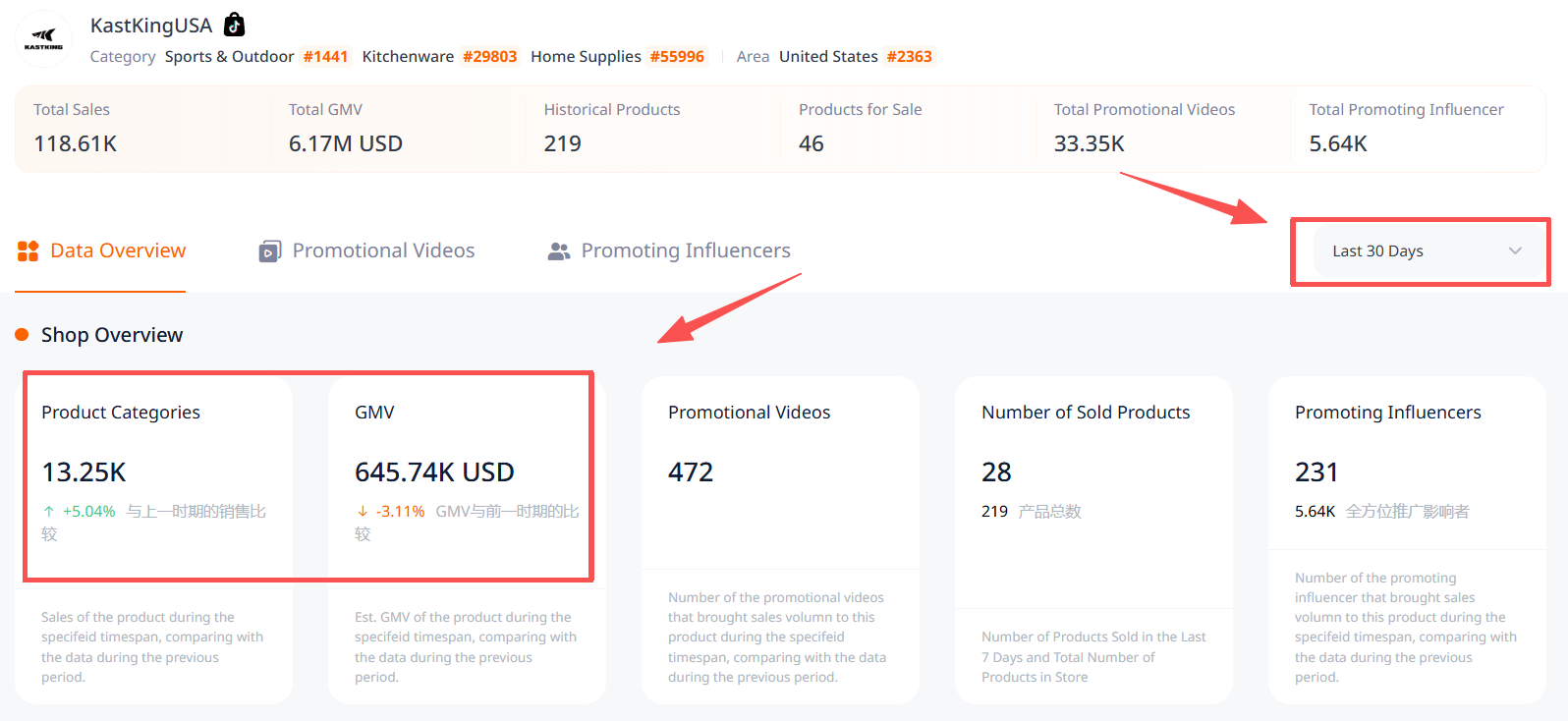
What is the secret behind its tremendous success? Today, the Noxinfluencer editorial team will take you behind the scenes to find out!
I. Brand Origins: A Garage Startup by an MBA Student
Tate Cui, the founder of KastKing, was born in Weihai, Shandong, China—a city known as the “Fishing Tackle Capital of the World,” where more than 60% of the world’s fishing tackle is produced.
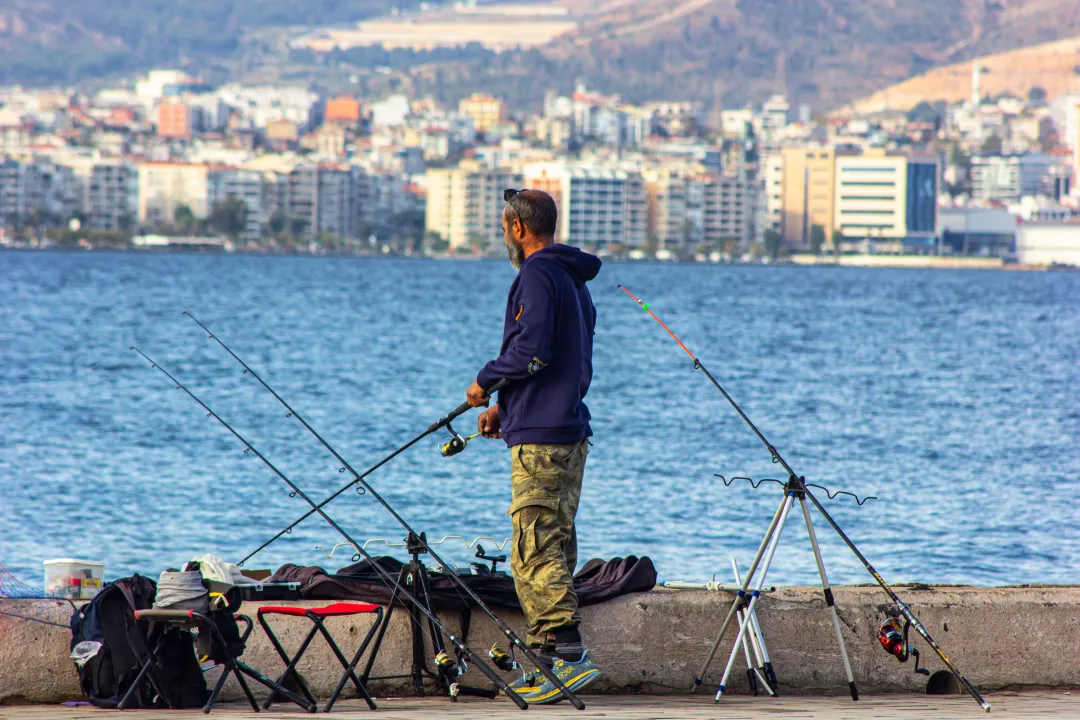
In 2013, while pursuing an MBA at Syracuse University, Cui keenly recognized the enormous business opportunities in the U.S. fishing tackle market: Fishing is practically a national pastime in the United States, with more than 50 million anglers.

This is because fishing has been a means of survival since colonial times, and the Founding Father, George Washington, was himself an avid angler; during the Westward Expansion, fishing and hunting symbolized the pioneers’ ability to survive and thrive in the wilderness, shaping American national values that emphasize independence, a connection to nature, and self-reliance.
Over the centuries, this has evolved into a culture passed down through generations: nearly every American family has a tradition of “fathers taking their children fishing,” which has become a regular ritual for parent-child bonding and family reunions.
However, the fishing market had long been dominated by Japanese brands, with mid- to high-end products often costing hundreds of dollars. So in March of that same year, the founder registered the parent company in a garage on Long Island, New York, and officially launched the KastKing brand.
KastKing adopted a unique “dual-headquarters” operational model: the U.S. handles brand marketing and channel operations, while China (Shenzhen and Weihai) manages product R&D and supply chain management. This model ensures a deep understanding of overseas markets while fully leveraging the cost and efficiency advantages of manufacturing in China.
II. Overcoming Core Technological Barriers and Breaking Free from the Fate of Contract Manufacturing
For a long time, Chinese fishing tackle brands have struggled to break into the global high-end market, with technological shortcomings being the core obstacle.
From its early days, KastKing rejected the industry’s common tendency to “prioritize sales over R&D,” instead making in-house technological innovation the cornerstone of its global expansion.
Starting in 2017, the brand partnered with top domestic universities to tackle core technological challenges, focusing on achieving continuous R&D breakthroughs in cold-forged toothed disc technology—a field previously monopolized by Japanese companies. In 2020, it successfully overcame this bottleneck technology, becoming one of the few brands worldwide outside of Japan to master this core process and completely breaking the foreign-owned technology monopoly.
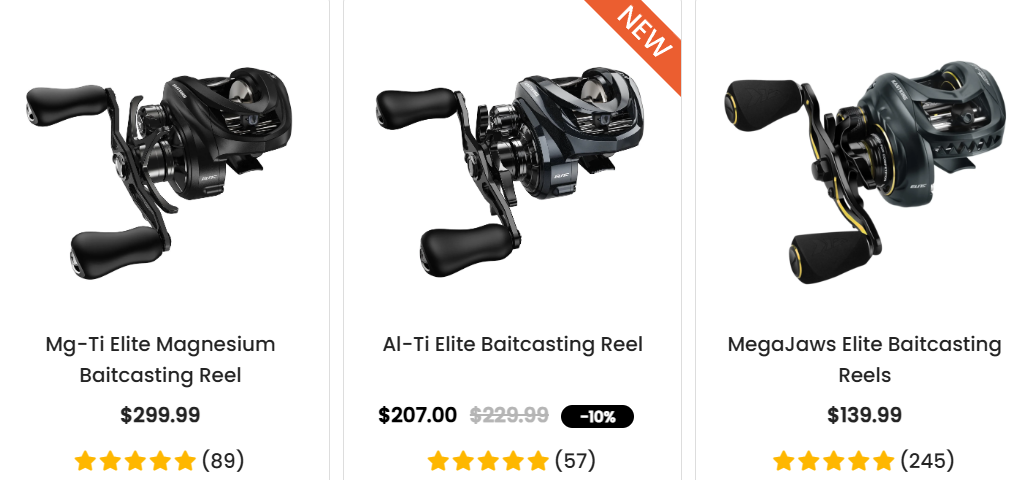
He also established the core philosophy of “Affordable Innovation”—entering the mid-range market with products that offer performance on par with international luxury brands but at prices 40% lower.
III. Influencer Marketing Helps Break Down Trust Barriers
The performance of fishing gear cannot be intuitively demonstrated through text or images alone; the smoothness of a reel, the flex of a rod, the abrasion resistance of fishing line, and the swimming action of lures must be tested in real-world conditions to convince consumers.
Influencer marketing is the core strategy for fishing gear brands to break through trust barriers, drive conversions, and build local brand awareness—and it is also the key tactic that has enabled KastKing to break into the U.S. market.
Influencers in the fishing niche are themselves seasoned anglers, professional fishermen, and local outdoor enthusiasts. They conduct real-world fishing tests in the wild—by lakesides and in coastal waters—and put equipment through rigorous, hands-on testing. The smoothness of line retrieval, the ability to land big fish without the line snapping, and the rod’s resilience are all visible, authentic results in their videos. This third-party testing is far more credible than a brand’s self-promotion.
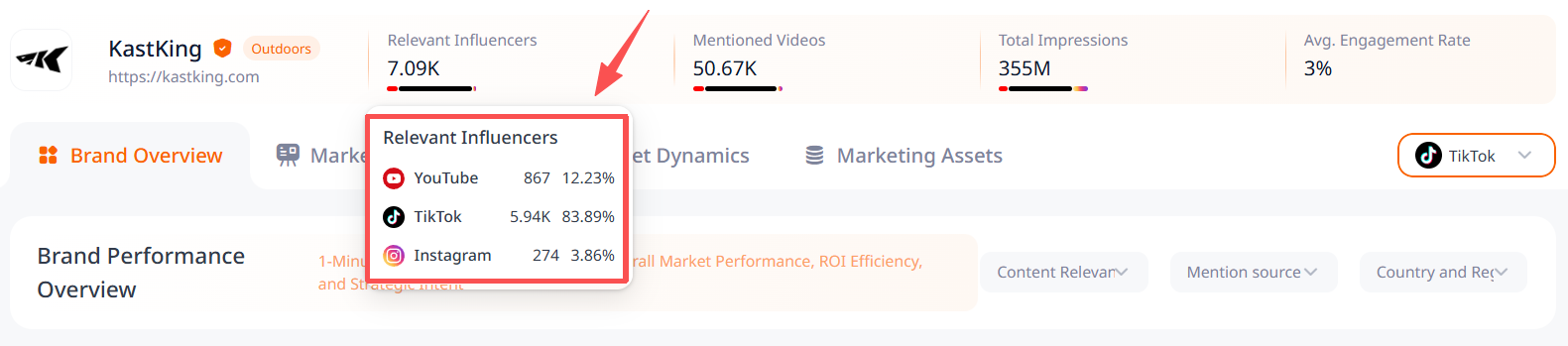
According to data from the Noxinfluencer platform, the company has collaborated with over 7,000 influencers within a year, generating nearly 50,000+sales-driving videos, with a particular focus on collaborations with TikTok influencers.(We cordially invite you to try it out:Influencer Marketing Platform & Analytics Tool | NoxInfluencer)
KastKing has long been committed to niche video content marketing. Since last year, the number of promotional videos posted daily has remained steady at between 50 and 120. Production volume has fluctuated only slightly, reflecting the brand’s routine phase of consistently publishing influencer content. The posting schedule is conservative, aimed at maintaining a baseline level of exposure.
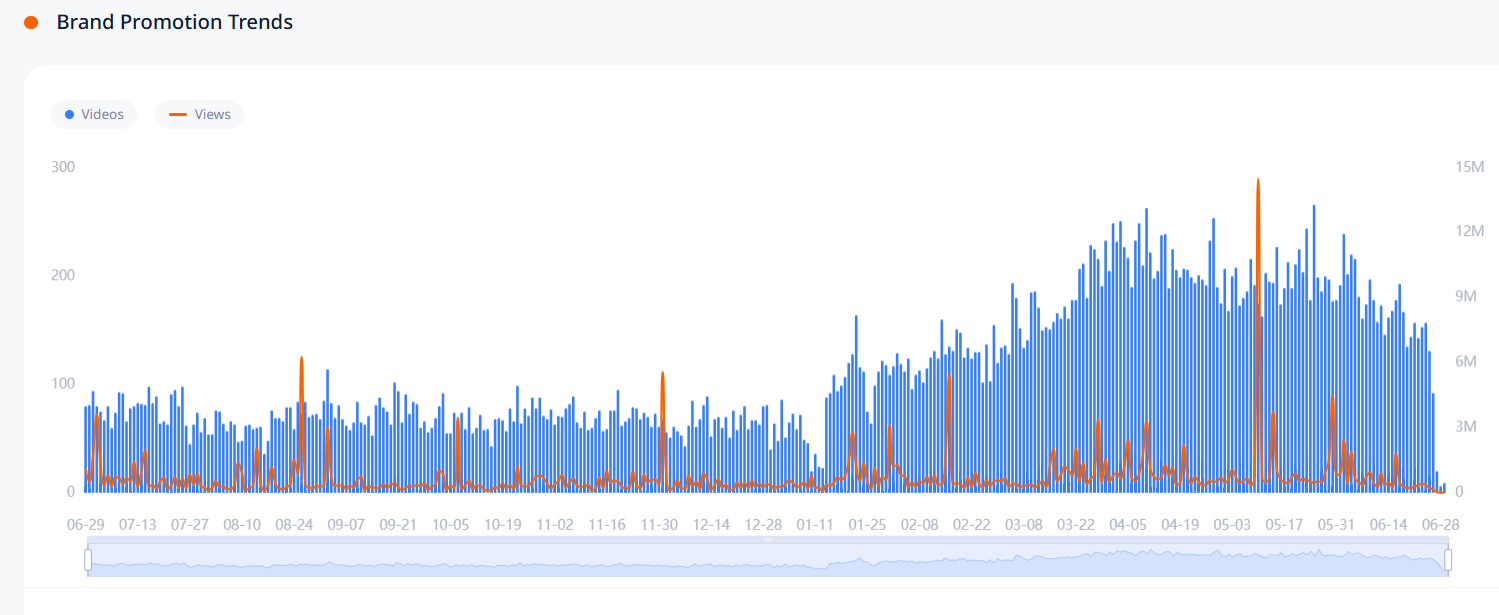
Since the beginning of this year, the number of product-promotion videos has continued to rise, climbing from an average of 100 per day to a peak of 250–280. Production reached its annual peak in March and April, marking the period with the strongest marketing efforts of the year.
The fundamental logic behind commercial advertising is that budgets are only increased when there is a positive return on investment. It is precisely because influencer marketing has generated significant brand exposure, conversions, and market growth that KastKing continues to expand its collaborations with influencers and increase content production on a large scale.
IV. Innovating the M2C Direct-to-Consumer Model to Drastically Reduce Costs
In addition to high-quality products, an innovative business model is the key to KastKing’s dominant market position.
The traditional fishing tackle industry employs a multi-tiered distribution model of “manufacturer—master distributor—distributor—retail store,” where markups at each level lead to inflated retail prices and profits diluted by the distribution channels, forcing consumers to bear a significant portion of the channel markup.
KastKing pioneered the M2C (Manufacturer to Consumer) model, which cuts out all intermediate distribution channels entirely. By relying on direct online sales channels to reach end users worldwide, the company has reduced overall operating costs by 30%. The savings from these channel costs are fully channeled into enhancing the product’s value for money, creating a virtuous cycle of “high quality, low prices, and strong reputation.”
At the same time, the brand adopts a Just-in-Time (JIT) supply chain management model, precisely aligning with market demand and scheduling production on demand, effectively reducing excess inventory and warehousing losses, and further optimizing its cost structure.
From its origins as an OEM manufacturer in the Weihai industrial cluster in China, to a niche startup born in a garage, and finally to a leading brand with annual sales of 500 million and the top spot in North America’s online fishing tackle market, KastKing’s decade-long global breakthrough has completely rewritten the stereotype of China’s fishing tackle industry as a low-end contract manufacturer. Its success proves that traditional manufacturing brands going global do not need to rely on low-price competition or follow the trend of traffic-driven hype.
In the future, with upgrades in production capacity and continued expansion into global markets, KastKing is poised to further capture the global mid-to-high-end fishing tackle market and become a flagship example for brands from China’s traditional industrial clusters as they go global.
