
A dark horse brand that emerged from China is raking in 400 million a year just by selling mattresses!
In the cross-border e-commerce sector, mattresses have long been considered the “most challenging” product category to export—high average order values, a strong reliance on in-person shopping experiences, and monopolies held by international giants all present insurmountable hurdles.
However, the Chinese brand [Sweet Night] has broken this industry curse: since officially expanding overseas in 2017, its products have been sold in over 130 countries and regions, with annual revenue exceeding 3 billion yuan. On Amazon alone, annual sales surpass $100 million, and the brand consistently ranks in the top three in the mattress category on major platforms like Amazon and Walmart.
How has this bedding company, founded in Foshan, Guangdong, managed to turn the tide in the fiercely competitive global market? Let’s take a closer look today!
I. The Starting Point for Going Global: From China’s Competitive Market to the Global Blue Ocean
Founded in 2011, Sweet Night initially focused on the domestic e-commerce market, with its total online sales exceeding 100 million yuan in 2013. By 2016, competition in the domestic mattress sector had intensified, and as the market became increasingly saturated, the brand keenly recognized the rising trend of cross-border e-commerce. It decisively adopted a core strategy of “going global,” setting its sights on broader overseas markets.
2017 marked a pivotal year for its global expansion: the company officially launched on major international e-commerce platforms such as Amazon, Walmart, Wayfair, and eBay, while simultaneously establishing a U.S. marketing center, taking its first concrete step toward globalization.
Unlike most overseas players who rely on “low-cost mass distribution,” Sweet Night established a clear “brand-driven globalization” strategy from the outset—refusing to operate as a cheap contract manufacturer and instead positioning itself as a “high-value-for-money professional sleep brand.” The company focused on filling gaps in the mid-to-high-end mattress markets in Europe and the U.S., thereby avoiding direct competition with international giants like Simmons and Tempur-Pedic.
From 2018 to 2020, SweetNight accelerated its global expansion: it participated in the Panama International Trade Fair, where it received praise from the then-President of Panama, successfully entering the Central and South American markets;
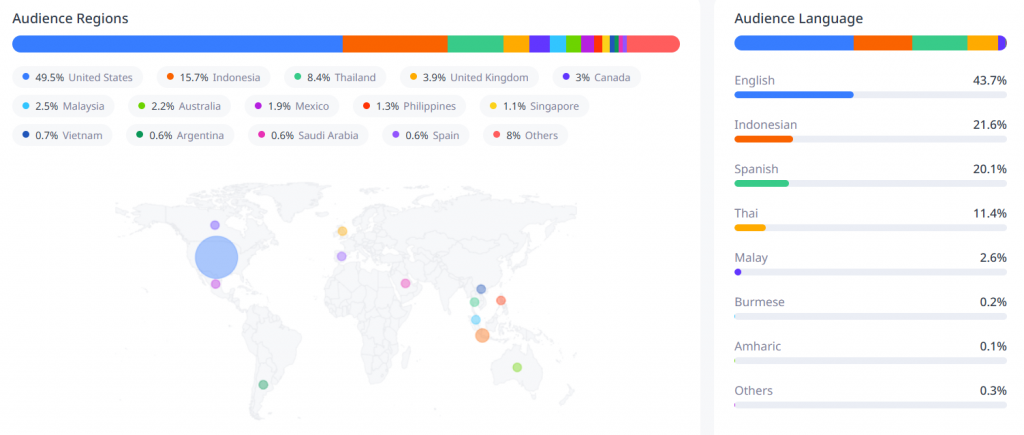
it also made its debut at the Cologne Fair in Germany (the world’s premier furniture trade show), boosting brand awareness in the European market; after 2020, it fully entered mainstream e-commerce platforms across the Americas, Europe, Southeast Asia, Oceania, and Africa, completing its initial global market coverage. Based on the [Audience Region] data from the Noxinfluencer platform, its reach has now expanded globally.(We cordially invite you to try it out:Influencer Marketing Platform & Analytics Tool | NoxInfluencer)
II. Breaking Through the Online Sensation: Solving the Problem of “Inability to Convey the Sleeping Experience”
As large, infrequently purchased durable goods with a high average transaction value, it is difficult for consumers to make purchasing decisions based solely on specifications and images. However, videos by home-focused influencers—such as bedroom makeovers, apartment styling, and product reviews—can vividly demonstrate a mattress’s core selling points, including firmness, support, and breathability. This allows viewers to virtually “test-lie” on the mattress, alleviating concerns about online purchases.
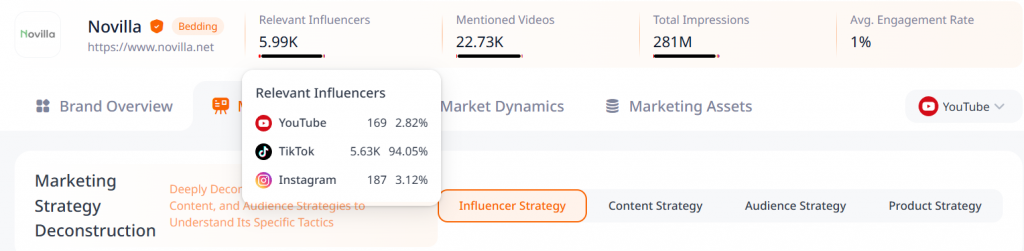
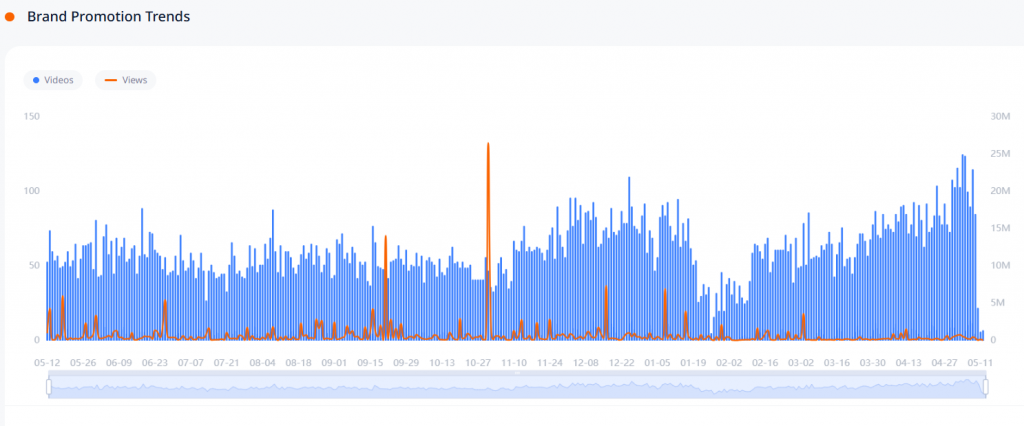
Take Novilla, another brand under Sweet Secret, as an example. Data from the Noxinfluencer platform shows that within a single year, the brand collaborated with over 6,000 influencers, resulting in 22,800 promotional videos that generated an astonishing 280 million+ impressions for the brand.(We cordially invite you to try this function out:Influencer Marketing Platform & Analytics Tool | NoxInfluencer)
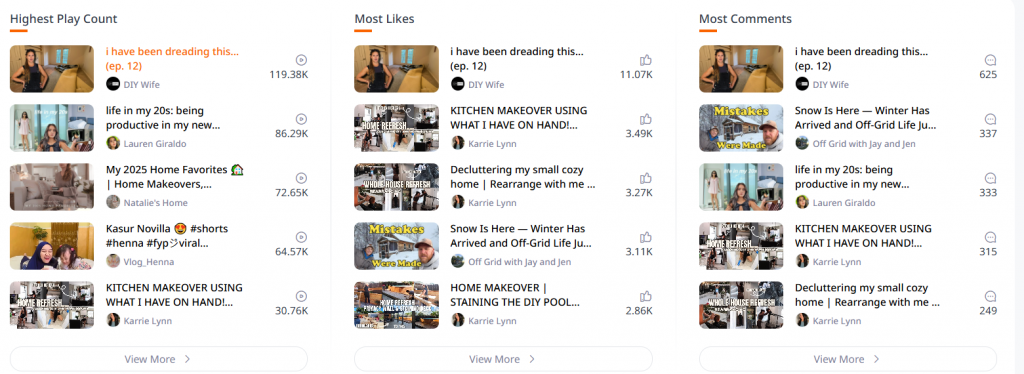
Looking at the list of influencers they collaborate with, we can see that the content with the highest views, likes, and comments is almost exclusively home makeovers, room decor, kitchen DIY projects, and lifestyle vlogs (such as Karrie Lynn’s kitchen makeover, Natalie’s Home’s annual home essentials, and DIY Wife’s renovation series).
Novilla’s products (mattresses) are a natural fit for this type of content: when influencers are styling bedrooms or updating their home essentials, they naturally incorporate mattresses into the scenes, allowing users to discover the products while watching practical renovation tips.
The number of influencer promotional videos for Novilla has continued to rise, with viewership peaking on multiple occasions, indicating that its influencer marketing strategy has yielded significant results and driven steady growth in brand visibility.(We cordially invite you to try this function out:Influencer Marketing Platform & Analytics Tool | NoxInfluencer)
Not only that, but Novilla also recruits users worldwide every month to try out its mattresses for free and pays them $1,000, encouraging them to share honest feedback about their sleep experience. This turns users into the brand’s “free ambassadors,” creating a viral word-of-mouth effect.
III. Building Global Barriers: Data-Driven Precision Implementation
A 2023 Gallup survey revealed that 57% of U.S. adults feel too hot while sleeping at least occasionally. Night sweats and stuffy sleep environments are widespread sleep disorders in hot regions across Europe and the United States, yet at the time, there was a gap in the mid-to-high-end mattress market to address this need.
Sweet Night is committed to in-house R&D of core technologies, focusing on the unique selling point of “cool-to-the-touch sleep.” The company developed the proprietary CoolNest® four-layer cooling technology system—ranging from instant-cooling micro-perforated ice-silk fabric to adaptive-temperature PCM phase-change gel, followed by continuous heat-conducting gel memory foam and a ventilated, heat-dissipating perforated foam layer—creating a complete cooling loop that precisely addresses the pain points of “heat-sensitive individuals.”
Furthermore, mattresses are bulky and heavy goods, characterized by high logistics costs, slow delivery times, and susceptibility to damage, making the supply chain a matter of survival for global expansion. Consequently, in 2019, Sweet Night proposed a “buy global, sell global” supply chain strategy, building a global supply chain system featuring “multi-base production + global logistics network + digital quality control” to break through geographical limitations.
This initiative enables “localized production and shipping”—orders for the European and American markets are prioritized for shipment from facilities in Mexico and the U.S., while those for Southeast Asia are shipped from Vietnam and Malaysia, significantly reducing logistics costs and delivery times (orders within the U.S. can be delivered in 3–5 days). In 2025, the brand invested 2.3 billion yuan to build a high-end smart home production base in Gaoming, Foshan, further strengthening the core support capabilities of its global supply chain.
Moreover, Sweet Night leverages its global supply chain platform to integrate upstream and downstream resources, enabling “small batches, frequent shipments, and rapid restocking.” This allows the brand to flexibly adapt to seasonal demands in different markets (such as the summer demand for cooling mattresses in Europe and the U.S., and the winter demand for thermal mattresses) while avoiding the risks of excess inventory or stockouts.
From a “Made in China” manufacturer to a global sleep brand, Sweet Night has spent a decade proving that Chinese home furnishing brands can certainly carve out a niche in the global market through solid capabilities and precise strategies, allowing “Chinese Smart Manufacturing” to benefit consumers worldwide.
