
Reaching a valuation of over $1 billion in just three years, this Chinese company has captured the high-end overseas market with its AI glasses.
In the business world, people tend to believe that “more is better”—the more features, the better; the higher the specs, the better; the broader the reach, the better.
But truly great products often emerge precisely from a deep understanding of “less.” This is true for Apple’s iPhones, and it’s true for Pop Mart as well. Pop Mart’s founder, Wang Ning, once posed a hypothetical question: What if a USB flash drive were included inside a blind box to make it “useful”? His answer was: People would only buy one. After all, one functional USB drive is enough.
Similarly, in the smart hardware sector, a Chinese company called Even Realities is applying the same “subtraction” logic. Less than three years after its founding, it announced the completion of a $150 million Pre-B round of financing, with a post-investment valuation exceeding $1 billion, officially joining the ranks of unicorns.
I. Product Strategy: Breaking Industry Inertia Through “Subtraction”
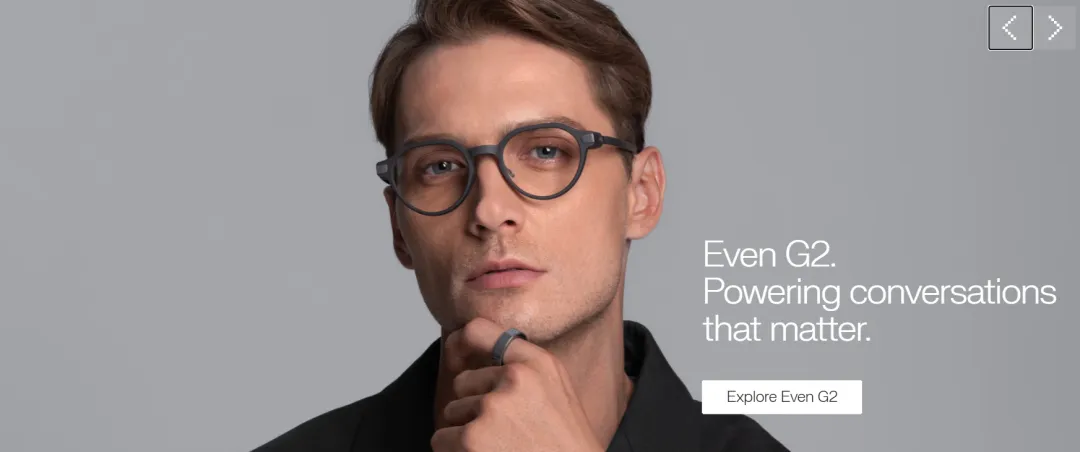
While the entire smart glasses industry is frantically adding features—upgrading camera resolution from 5 million to 12 million pixels and expanding functionality to include everything from photo recognition to AI-powered encyclopedias—Even Realities is taking the opposite approach.
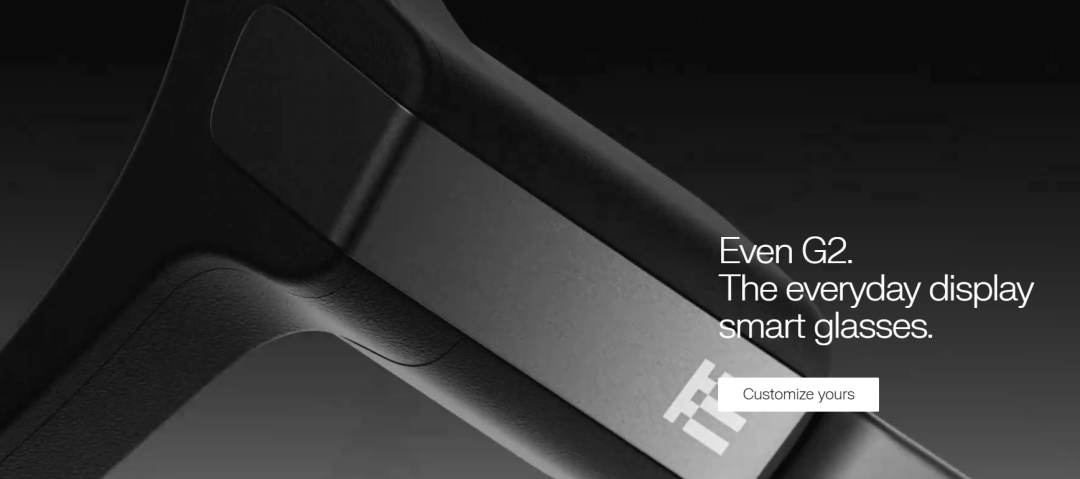
It has eliminated the camera, speakers, and large color display, as well as dozens of entertainment features built on top of apps—such as AI object recognition, encyclopedia Q&A, and calorie tracking. Behind this “logic of subtraction” lies a simple yet often overlooked truth in the industry: smart glasses must first and foremost be a good pair of glasses.

The founder himself is a heavy eyeglass wearer with 600 degrees of myopia and has been collecting high-end eyewear since high school. He understands all too well that eyeglasses are not smartphones: no matter how powerful the features of a pair of smart glasses may be, if they’re uncomfortable to wear or look “weird,” users will most likely treat them as nothing more than a toy for weekend outings rather than a replacement for their everyday glasses.
Based on this philosophy, Even Realities is relentlessly focused on the wearing experience. It also takes a restrained approach to smart features. Rather than attempting to cover every AI scenario, the company focuses on a few high-frequency productivity scenarios such as teleprompter, translation, navigation, and notifications. The founder’s explanation gets straight to the point: “Display capability is the first principle of smart glasses.”
This product philosophy has allowed Even Realities’ products to truly integrate into users’ daily lives. Data shows that Even users have a daily active rate of 60%–70% and a weekly active rate exceeding 90%. In the smart glasses category—where “returns and gathering dust are the norm”—this is nothing short of a miracle.
II. Market Strategy: Top-down, starting with the top of the pyramid
Another unconventional choice made by Even Realities is its pricing. The G2 glasses themselves retail for $599, the accompanying smart ring for $249, and custom prescription lenses cost an additional $200 or so, bringing the total price per set to over $800—and in some cases, even exceeding $1,000. This price far exceeds the mainstream pricing of other smart glasses on the market.
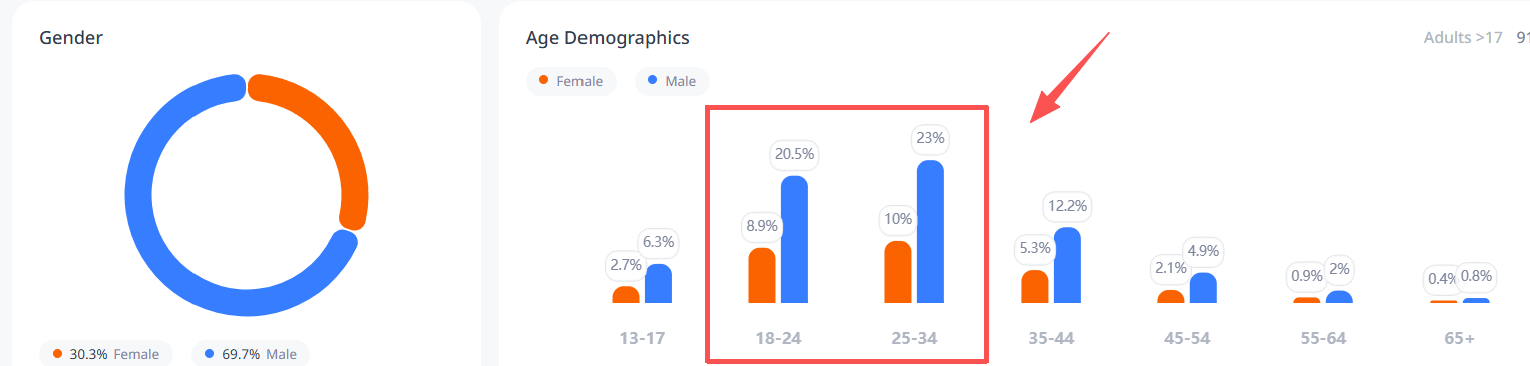
The justification for this high price lies in the company’s precise targeting of its user base. According to data from the Noxinfluencer platform, Even Realities’ user profile centers on people aged around 25–34—precisely the high-net-worth, high-influence demographic found in Europe and the United States.(Data from Noxinfluencer, We cordially invite you to try it out :Influencer Marketing Platform & Analytics Tool | NoxInfluencer)
The founder summarizes this strategy as a “top-down” market approach. “AI glasses are still in the early stages of their product category. The priority is to get people with greater influence and purchasing power to adopt them, rather than expanding market share through price wars. The vast majority of products that go on to reach the mass market—and even change people’s lifestyles—start by penetrating the market layer by layer, beginning with highly educated demographics.”
III. Channel and Influencer Marketing: Targeted Reach, Tiered Conversion
When it comes to channel strategy, Even Realities also takes an unconventional approach. Rather than launching on crowdfunding platforms like Kickstarter, the brand debuted directly on its own independent website. At the same time, Even Realities has partnered with over 400 high-end eyewear stores worldwide, with offline sales accounting for more than half of its total sales. This combination of an independent online store and high-end offline eyewear stores precisely aligns with the purchasing habits of its high-end target audience.
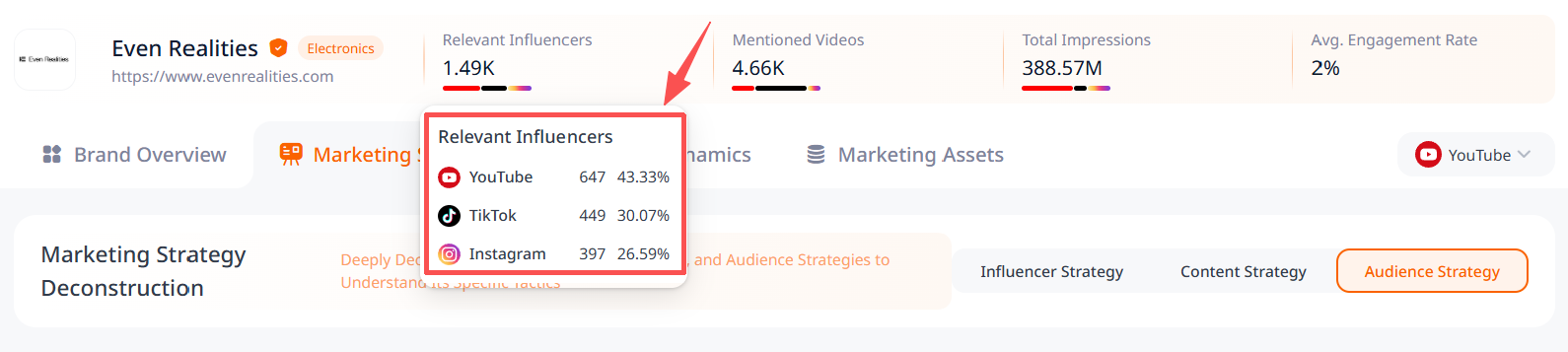
In terms of influencer marketing, the brand collaborates with over 1,400 influencers annually, focusing primarily on YouTube and TikTok, and produces more than 4,700 sales-driven videos. These videos have generated 388 million brand impressions for Even Realities.(Data from Noxinfluencer, We cordially invite you to try it out :Influencer Marketing Platform & Analytics Tool | NoxInfluencer)
Even Realities generally adopts a pyramid-style tiered approach to influencer marketing. Micro-influencers account for over half of its collaborations, using low-cost, high-volume content to build a comprehensive content foundation across the web, fostering an organic word-of-mouth atmosphere and boosting platform search rankings. Mid-tier influencers target specific niche communities with precise recommendations, while a small portion of the budget is allocated to signing top-tier and super-niche influencers to create benchmark bestsellers and establish the brand’s professional credibility.(Data from Noxinfluencer, We cordially invite you to try it out :Influencer Marketing Platform & Analytics Tool | NoxInfluencer)
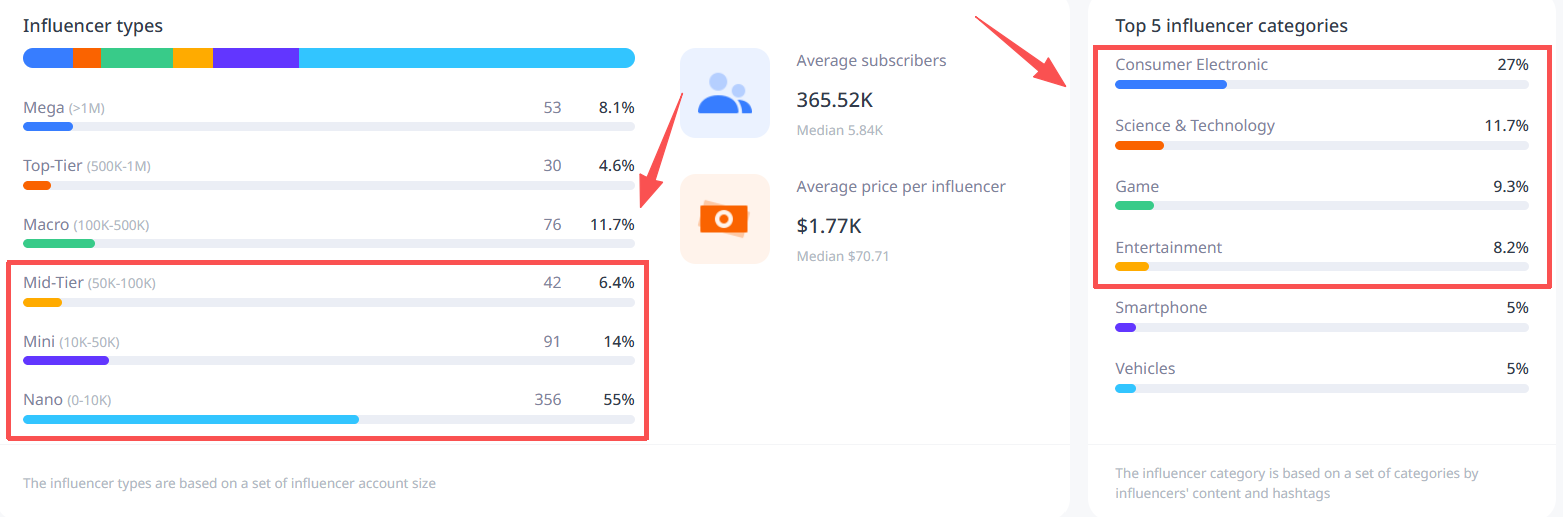
In terms of niche selection, the strategy focuses heavily on influencers in electronics and technology, supplemented by related verticals such as gaming and mobile phones, while deliberately avoiding ineffective traffic from the general entertainment sector. The audience aligns closely with the target demographic for the brand’s high-end business smart glasses.(Data from Noxinfluencer, We cordially invite you to try it out :Influencer Marketing Platform & Analytics Tool | NoxInfluencer)
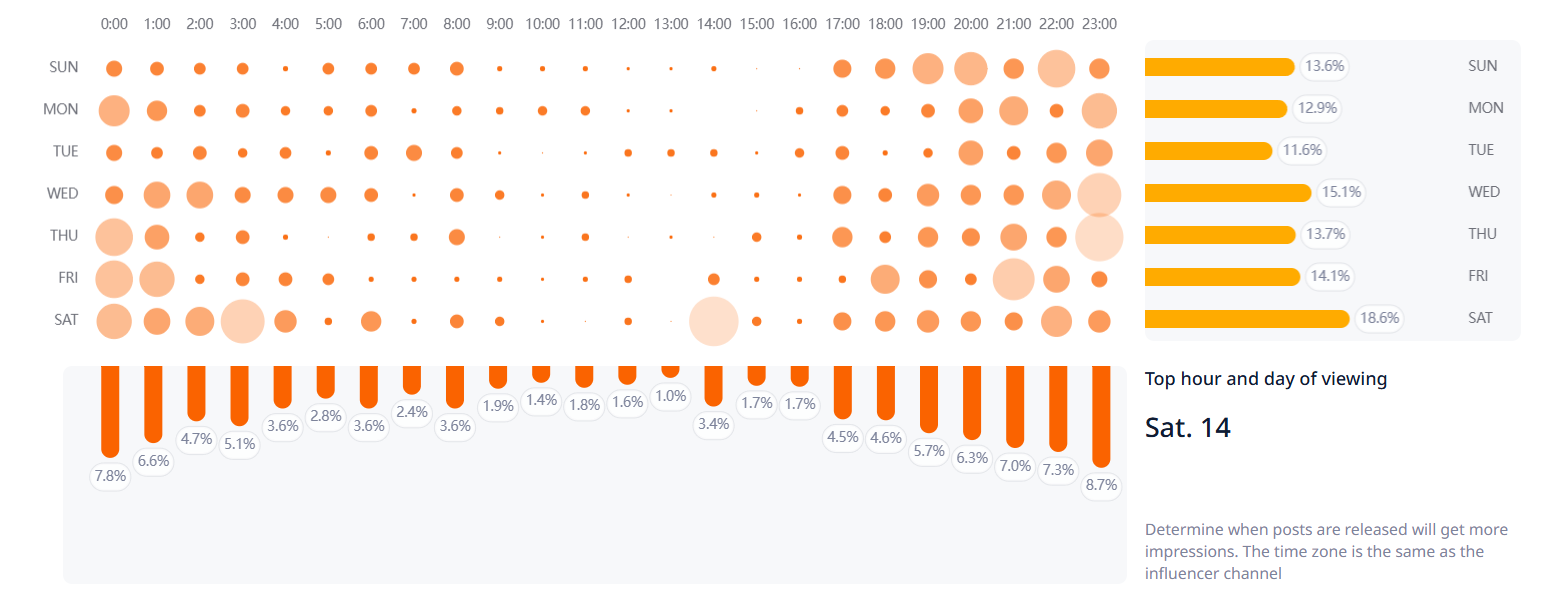
The brand maintains a stable and frequent content update schedule, with consistent, high-frequency content releases on a weekly and monthly basis, ensuring sustained account activity. The timing schedule follows a very clear operational strategy: content distribution is highly concentrated during the prime nighttime slot from 10:00 PM to midnight, with very few posts during midday or the afternoon. This aligns with the target audience’s nighttime activity patterns and effectively avoids wasting content resources during low-traffic periods.
Looking at the weekly cycle, Saturday accounts for the highest proportion of content releases, followed closely by Wednesday and Friday. Overall traffic is concentrated on weekends and weekday evenings.
This proven operational approach also serves as a reference for other brands’ content strategies: using data to identify peak audience activity times for scheduling, collaborating with targeted influencers, and differentiating release windows for key promotional content versus regular product discovery content to optimize traffic utilization.
In July 2026, when Even Realities joined the ranks of unicorns with a $1 billion valuation, the company’s products hadn’t even officially gone on sale in mainland China. Its other target markets—the U.S., Japan, South Korea, the Middle East, and Europe—contributed all of its revenue.
The story of Even Realities reveals a simple truth: in the frenetic AI hardware race, sometimes “subtracting” is harder than “adding”—but it’s also more valuable.
While the entire industry was piling on parameters and competing on features, the company chose to return to the most fundamental question about its product: Would users be willing to wear it on their faces every day? It was precisely this countercultural restraint that allowed it to emerge as a unicorn in less than three years in a sector dominated by industry giants.
