
A Chinese Entrepreneur Now Makes Eight Figures a Month Selling Home Goods on Amazon
The global home goods market is expanding at a staggering pace: from roughly 800 billion in 2021 to a projected 1.7 trillion+ by 2030 — nearly doubling in size.
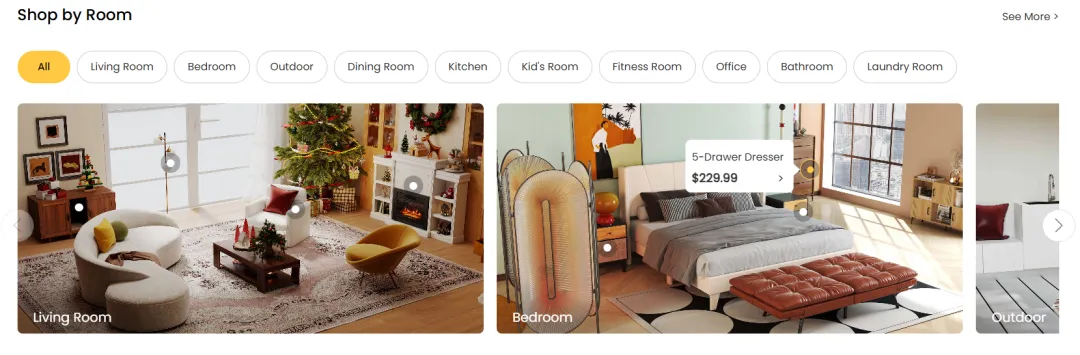
While most home goods sellers are still fighting over traffic for a single hit product, one company packed sofas, split air conditioners, BBQ grills, and dog crates into a single brand — and sold them to over 100 million households.
That brand is Costway. In 2026, it appeared on Forbes’ DTC brand list alongside Anker, DJI, and Haier. The surprising part? Almost no one in its home city has ever heard of it.
Starting from a 40-square-meter office with one entrepreneur from Ningbo — how did it become the quiet winner in a trillion-dollar market?
I. The Starting Point: The Dilemma of an OEM Factory
The story begins in 1998, in a 40-square-meter office in Ningbo with just two people. At the time, Costway’s parent company, HaoYa, sourced products on behalf of major brick-and-mortar retailers — whatever the client wanted, they found it; whatever the order size, they organized factories to produce it.
The business did well: revenue crossed $100 million for the first time in 2005, and by 2011 total trade volume reached 1 billion RMB.
But the ceiling of OEM work was obvious. The end channels belonged to someone else. The brand belonged to someone else. So did the pricing power. As the founder put it: without your own brand, you are destined to have no pricing premium.
So in 2011, HaoYa launched Costway. Cross-border e-commerce wasn’t a buzzword yet, and the company was one of only a handful of sellers on Amazon’s US storefront. But it didn’t start from zero — it had been testing the waters on Amazon since around 2008, and it held over a decade of accumulated buyer-demand data and factory relationships.
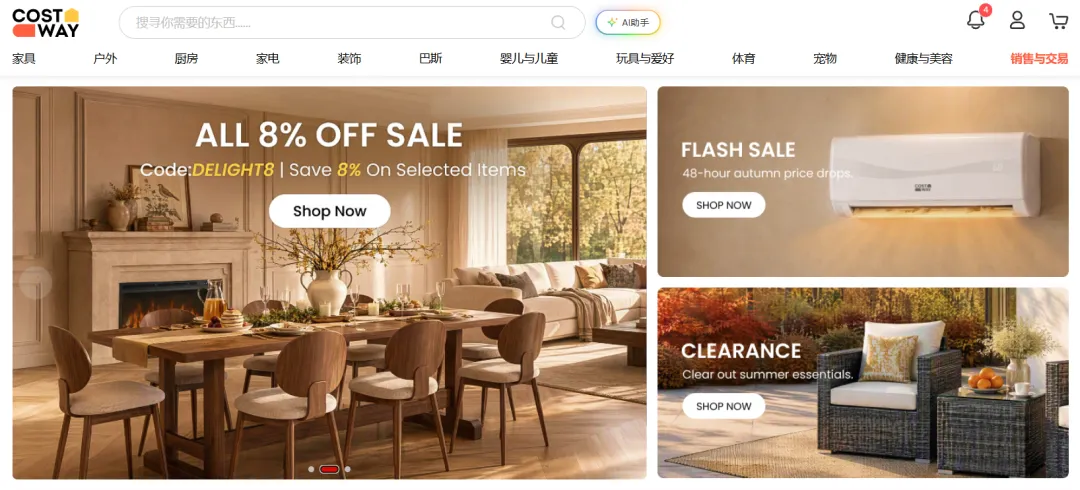
As of September 17, 2026, Costway had recorded more than 26,800 orders and $7.48 million in sales on Amazon’s US site in the past 30 days, holding a firm spot on the bestseller lists in its categories.
As the product catalog kept expanding, a single marketplace could no longer carry the growth. Costway extended its reach to eBay, Walmart, and other platforms, building a multi-channel matrix to reach a more diverse customer base.
II. A Counterintuitive Decision: Build the Roads Before Selling the Goods
The first wall in selling furniture online is physical distance.
A sofa shipped from a factory to a customer across the ocean takes 30+ days by sea plus customs clearance. When a consumer wants to return it, the return shipping cost can exceed the product’s value, so sellers often just write it off. Industry estimates put logistics costs at 10%–15% of profit.
In 2012, Costway leased a 3,000-square-meter warehouse in Los Angeles and built its first local fulfillment center. On the books that year, it looked terrible — rent, labor, and inventory costs were all real money, while sales had yet to take off.
But it bought three things: speed (delivery compressed from weeks of international shipping to 3–5 days from local stock), viable returns (return costs down by roughly 40%), and — most importantly — the qualification to sell bulky items at all.
Today, Costway operates at serious scale: 22 fulfillment and marketing centers, 600,000 square meters of self-operated warehouse space, 9 warehouses across the US, and subsidiaries in 10 countries.
Costway even opened up this fulfillment infrastructure to others, running a dropship program: smaller sellers take the orders, Costway ships them, with delivery in 2–7 business days.
On August 29, 2025, an executive order fully eliminated duty-free treatment for packages under $800 (de minimis). That was a heavy blow to direct-mail small-parcel models — but a relative advantage for sellers whose inventory already sits in local warehouses. Looking back, Costway’s foresight is hard to miss.
III. Turning Influencers Into a Content Supply Chain
Home goods have a marketing problem no other category faces: long decision cycles and high price points, and buyers must first picture the piece inside their own home before clicking “buy.”
A 15-second ad can’t recreate the showroom experience — which is exactly why influencer marketing has become the fastest-growing promotional channel for furniture brands.
In Costway’s growth model, influencer marketing isn’t brand advertising. It’s a content supply system matched to its 15,000 SKUs.
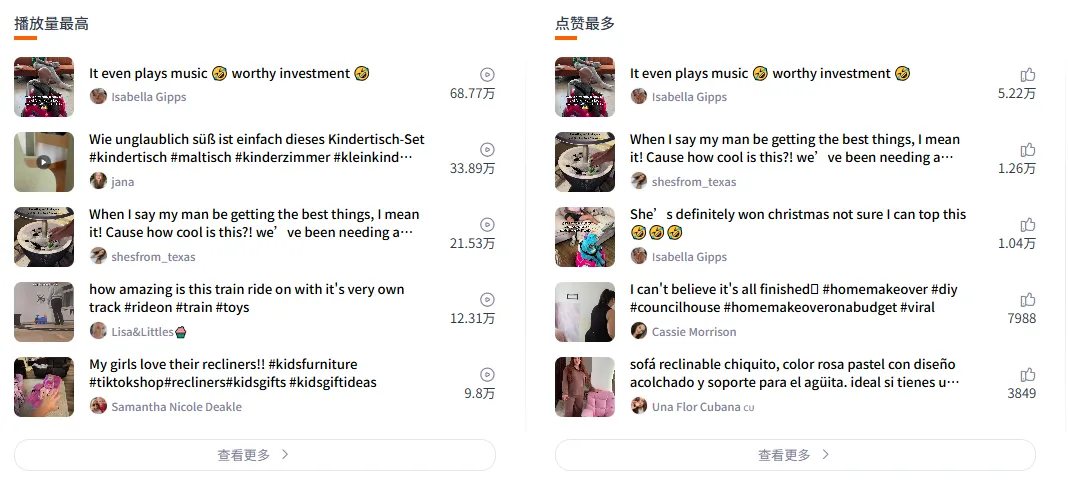
According to Noxinfluencer platform data, Costway is connected with 10,000+ influencers, with 43,000+ product videos to date.(Data from NoxInfluencer, We cordially invite you to try it out :Influencer Marketing Platform & Analytics Tool | NoxInfluencer)

Costway rarely bets on celebrities. Instead, it deploys a vast network of mid- and long-tail creators with around 10K followers. These creators charge less, enjoy high trust from their audiences, and produce content that reads like genuine reviews — a perfect fit for a bulky-goods business built on thin margins and high volume.
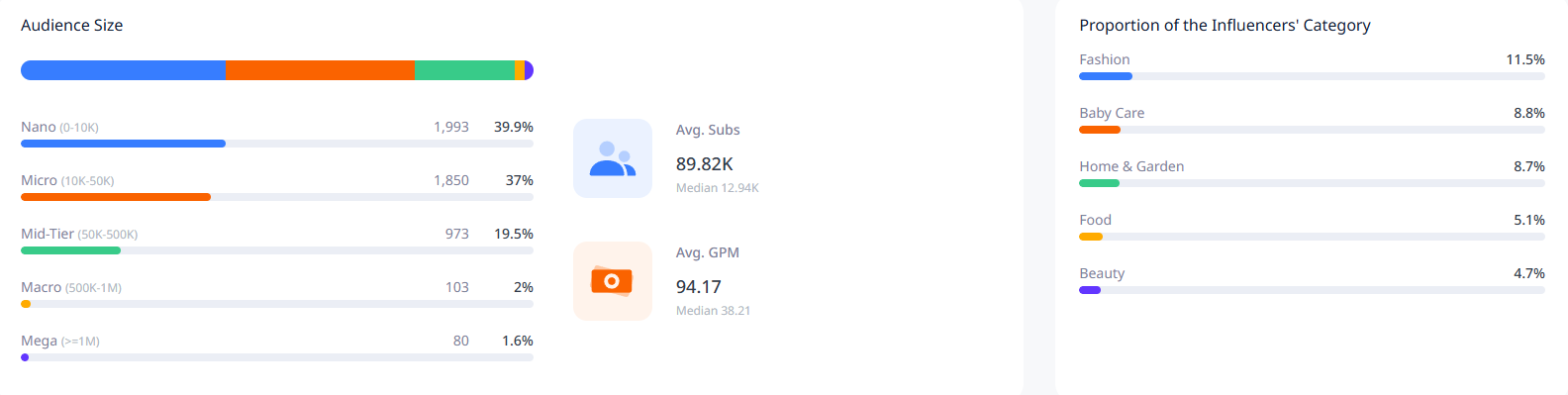
And it never limited itself to home-and-living creators. It works with any lifestyle creator who has “a home scene to film”: parenting creators showcase nursery furniture, fashion creators feature at-home outfits, beauty creators casually reveal a vanity table while filming their makeup routine. The products are woven into life stories, not spec comparisons.(Data from NoxInfluencer, We cordially invite you to try it out :Influencer Marketing Platform & Analytics Tool | NoxInfluencer)
There’s no stroke of genius in Costway’s story — just years of accumulated groundwork. But it proves that a trading company can grow from manufacturing for other people’s brands to owning its own.
Whether you’re a seller going deep on home goods, or a team hoping to move from selling products to building a brand, there may be an answer for you in the way Costway did it.
About Noxinfluencer
Noxinfluencer is the world’s most-visited influencer marketing engine, helping brands precisely match with creators worldwide, manage outreach and collaborations, and monitor campaign performance for efficient, effective brand-creator partnerships.
