How One DTC Brand Turned a Packet of Hydration Powder Into a $1 Billion Business
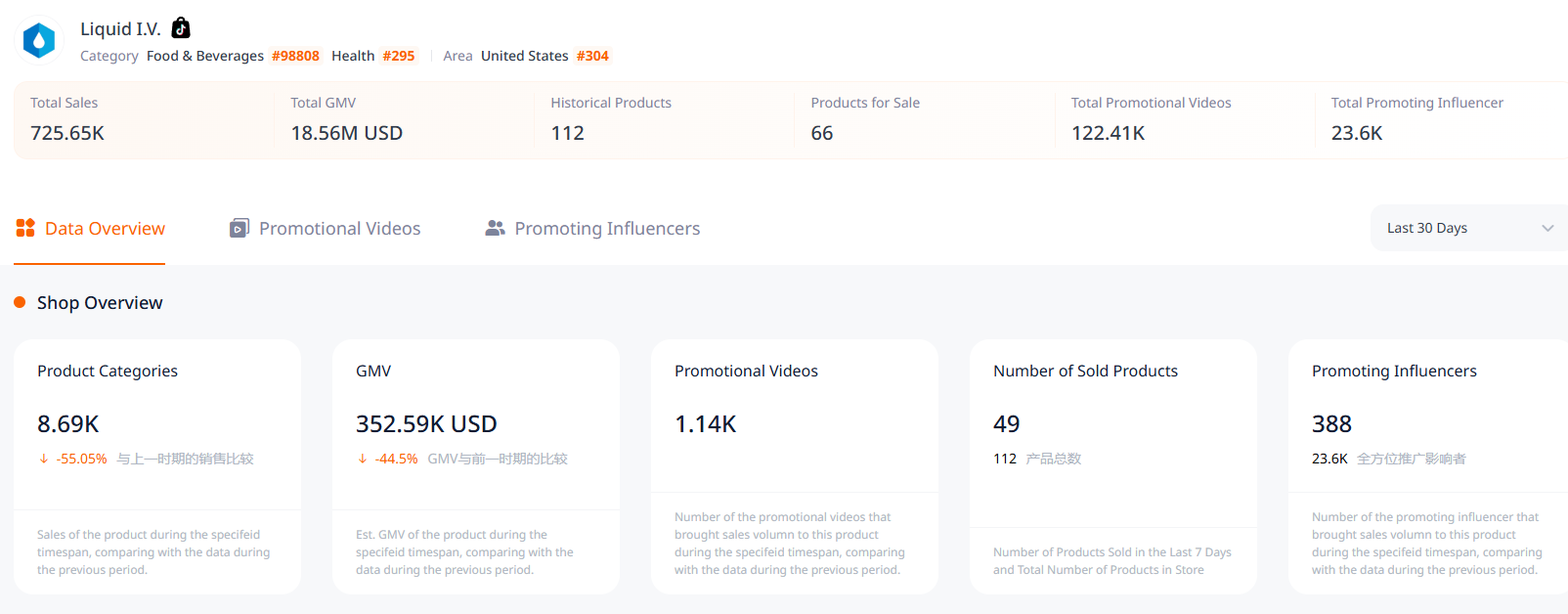
Add powder to water and you hydrate faster? It sounds almost too simple to matter. Yet a little stick pack weighing barely a dozen grams has generated more than $1 billion in retail sales. According to Noxinfluencer platform data, on TikTok’s US market alone, the brand rang up more than $20 million in sales in just six months.(Data from NoxInfluencer, We cordially invite you to try it out :Influencer Marketing Platform & Analytics Tool | NoxInfluencer)
In 2020, it was acquired by Unilever for roughly $500 million — and today it is the largest brand in that giant’s health portfolio.
The brand is Liquid I.V. In the US, gym-goers drink it, hangover sufferers drink it, and so do office workers fighting the mid-afternoon slump. Even Justin Bieber and Kendall Jenner are among its investors.
I. Category Breakthrough: Redefining What “Hydration” Means
Most consumers’ default image of electrolyte powder is a sports supplement — something you reach for after a hard workout or a bout of illness, not an everyday drink. If people want hydration, they buy a beverage.
Yet electrolyte replenishment has long been part of everyday consumption in the US: after a long flight, a day outdoors, or a big night out, mixing a packet into water is a common choice. There’s real physiology behind it — the body absorbs water along with electrolytes, which carry it into cells. Drink only plain water and much of it quickly ends up in the stomach, with part flushed out by the kidneys; without enough electrolytes, water struggles to stay in your cells, and you can drink plenty and still feel dry and sluggish. Plain water is also, frankly, boring — electrolyte powder adds flavor.
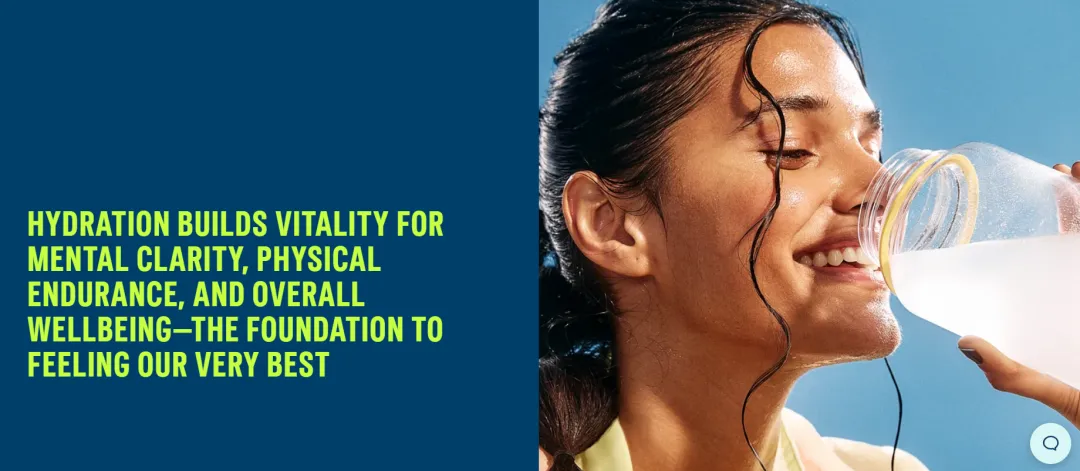
Liquid I.V.’s single most important strategic move was repositioning electrolytes from a sports supplement into an everyday hydration solution for everyone.
The brand’s core narrative is anchored on its CTT (Cellular Transport Technology), delivering one simple, easy-to-grasp differentiator: faster hydration than plain water. Its formula pairs electrolytes with essential vitamins — no artificial colors, non-GMO — setting it apart from sugary traditional sports drinks. More crucially, it locks onto four high-frequency dehydration scenarios: long-haul travel and jet lag, heat and sun exposure, late nights and fatigue, and post-party recovery. That puts the product inside everyday states anyone can relate to, instead of boxing it into the gym.
This positioning directly lifts purchase frequency: users don’t need to work out two or three times a week to buy — business trips, flights, a sluggish afternoon at the office, or a summer outing can all trigger a purchase.
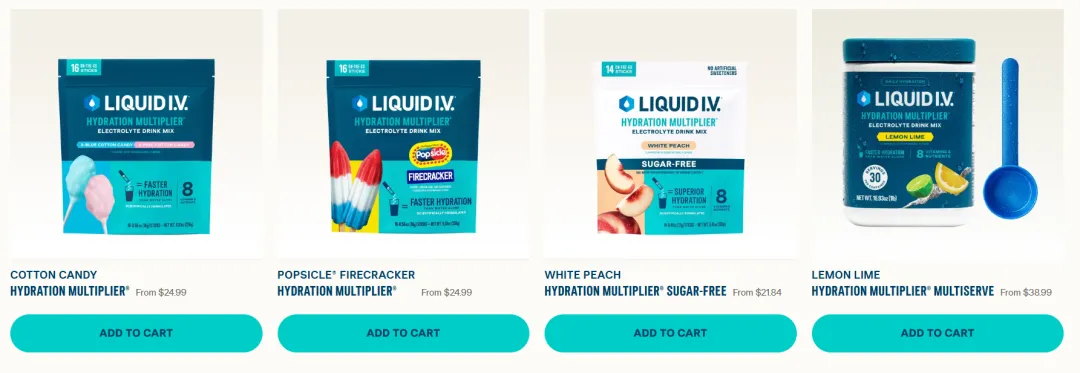
From there, the brand extended its product line sideways along the hydration super-category: Sleep Multiplier for sleep, a sugar-free line, and an energy line — evolving from a single hydration product into a one-stop health-mix brand and expanding user lifetime value.
II. The Growth Engine: Free Samples First, Then Influencer Storytelling
Liquid I.V.’s underlying growth logic was never heavy ad spend. It was let people try the product first, then let influencer content do the spreading — “samples first” ran through both its early cold start and its later scaling.
In the early days, the founder personally staffed sampling tables at Whole Foods, trading small samples for the first wave of genuine feedback. Once the brand scaled, it kept giving away tastings at music festivals, F1 races, carnivals, and outdoor events — 17 million samples handed out at events in 2023 alone, reaching millennials and Gen Z exactly where they gather.
Its marketing center of gravity sits on TikTok. According to Noxinfluencer platform data, the brand partnered with 23,000+ creators in just six months.
You’d assume an electrolyte brand would chase fitness influencers. But Liquid I.V.’s positioning long ago broke out of the sports lane, so its creator selection targets people and scenarios where dehydration and fatigue are likely.(Data from NoxInfluencer, We cordially invite you to try it out :Influencer Marketing Platform & Analytics Tool | NoxInfluencer)
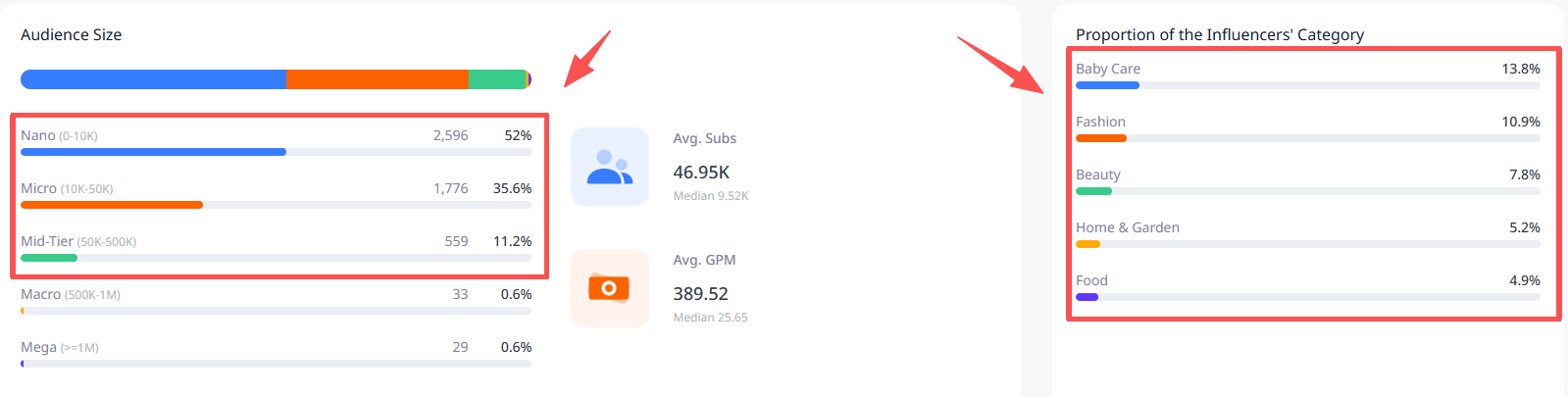
Moms are a near-perfect match: pregnancy and postpartum leave women prone to dehydration and exhaustion, and frequent night feeds or long outings with little ones make it worse. That’s why “mom-and-family creators” are among its most-used partners.
On content, Liquid I.V. refuses stiff ingredient explainers. It favors slices of everyday life: mixing a packet on a plane, beating the office afternoon slump, hydrating on a summer hike, recharging at a music festival — the product gets woven into vlogs, everyday-favorites videos, and travel diaries, so it never feels like an ad.
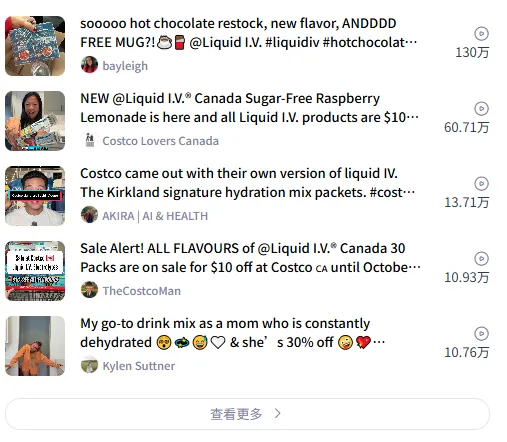
It also runs a TikTok open affiliate program: samples plus commission for creators, with genuine freedom over content — the only hard line drawn is compliance (no claims about curing hangovers, treating illness, or sobering up), steering clear of regulatory risk around functional products while encouraging authentic, self-use sharing.
III. The Channel Ladder: Boutique Credibility First, Then Full Coverage
A common trap for DTC brands: hot online, distrusted offline — or forcing their way into big retail without brand pull. Liquid I.V. climbed the channel ladder step by step, with each stage playing a different role.
Stage one: build trust through boutique grocers, starting with Whole Foods. Getting onto the shelves of a premium organic grocer is itself a trust certification for a health product — winning that shelf equals a “clean, quality” endorsement that paved the way into mass channels. This was the starting point of the brand’s credibility.
Stage two: volume through warehouse clubs. Entering Costco was Liquid I.V.’s breakout moment. Costco members spend heavily and happily stock up, a perfect fit for multi-pack formats — it let the brand surge in revenue, reach whole households, and complete the leap from niche favorite to household staple. From there it rolled into Target, CVS, GNC, and other mass retailers and convenience stores, covering pharmacies and airport shops to match travel and on-the-spot hydration needs, while online it ran its own subscription DTC site alongside Amazon.
The 2020 Unilever acquisition marked a qualitative shift in channel capability. No longer a standalone DTC brand going it alone, Liquid I.V. plugged into Unilever’s global supply chain, distributor network, and compliance teams.
It then expanded rapidly from the US into Canada, the UK, and Australia, entered China through cross-border e-commerce, and kept pushing into Brazil, Mexico, and beyond — using a mature channel system to lower expansion costs while keeping the flexibility of independent brand operations.
IV. The Brand Moat: Turning a Donation Mission Into Long-Term Emotional Equity
In a commoditizing electrolyte category, flavor, packaging, and price are all easy to copy. Liquid I.V. built a differentiated asset that isn’t: a give-back mechanism — for every purchase, hydration is donated to someone in need — binding the act of buying to doing good. It’s a soft moat competitors can’t easily replicate.
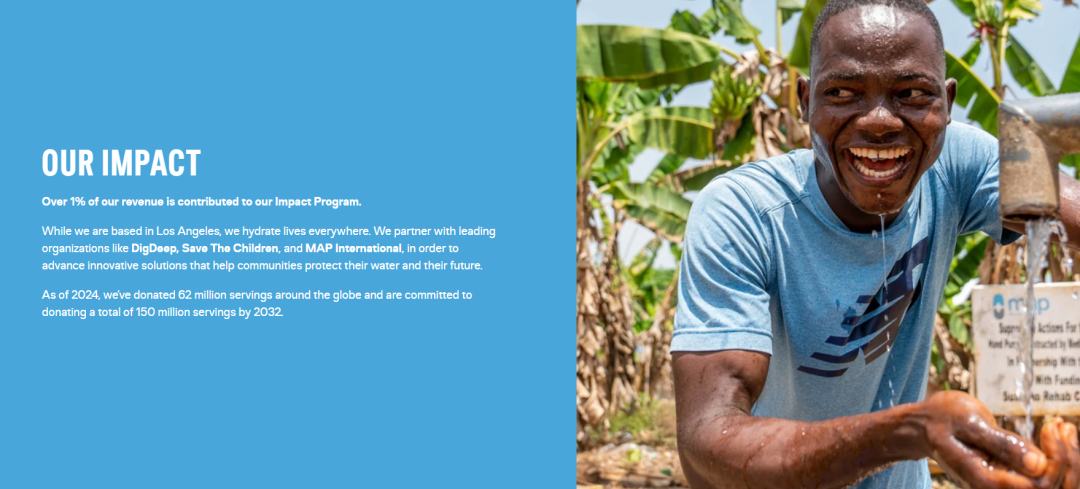
This is not a campaign-scale marketing stunt. The mission is part of the brand’s top-level narrative, carried continuously across its website, packaging, creator content, and live events.
For Gen Z and millennial consumers in the US market, values alignment is a real purchase driver: between two otherwise identical electrolyte powders, users will pick the brand that gives back. The story also gives creators a natural content angle, so recommendations carry emotional depth beyond “does it taste good and hydrate.”
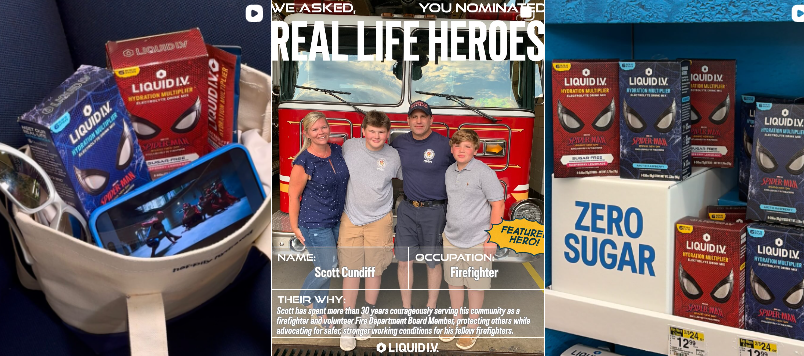
On top of that, the brand keeps running youth-oriented collaborations — limited-edition flavors and packaging with classic candy and film IPs — continually generating buzz and keeping social feeds fresh, hedging against category fatigue.
It proves one thing: success in consumer health doesn’t require breakthrough technology.
Put a simple product into the countless small, real-need moments of everyday life — use content so people see it, samples so they try it, and channels so they can grab it anywhere — and a category leader is within reach.
