
A Fan That “Looks Just Like” the DJI Pocket — and the Brand That Turned Small Fans into a Billion-RMB Business
$15 won’t even cover the cost of a DJI battery. It will, however, buy you a fan with a built-in video camera — one that looks strikingly like the DJI Pocket.
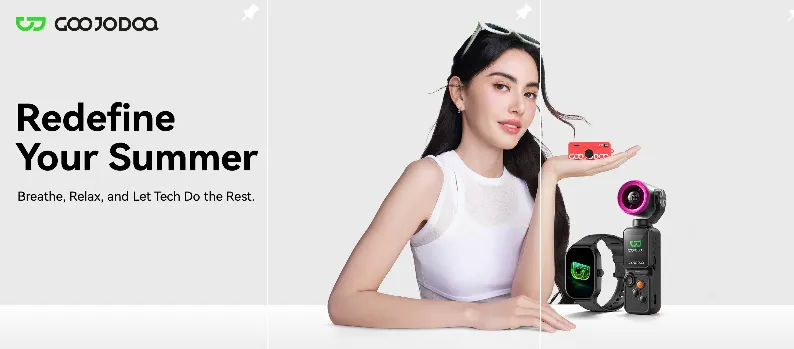
The price is around $20, roughly twice that of the brand’s standard models. Yet plenty of people are buying. By 2026, the brand behind it had racked up more than RMB 1.1 billion in cumulative sales across its five TikTok Shop storefronts in Southeast Asia.
The brand is GOOJODOQ, founded in 2017. It took an unglamorous product category and built it into a ten-figure business.
I. First Through the Door on TikTok Shop
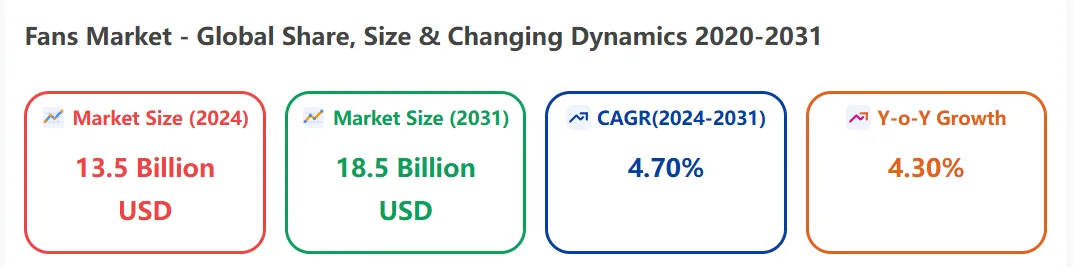
A Market Intelligence report puts the global fan market at roughly USD 13.5 billion in 2024, projected to reach USD 18.5 billion by 2031 — a compound annual growth rate of about 4.7%.
But portable fans were already a red ocean in Southeast Asia long before this. Generic white-label units could be sourced wholesale for under RMB 20, and the leaders were firmly entrenched — Jisulife alone shipped 30 million units in 2024, with revenue topping RMB 1 billion.
Latecomers to a market like this usually have two options: get cheaper, or get different. GOOJODOQ chose the latter. But before choosing its product, it chose its moment.
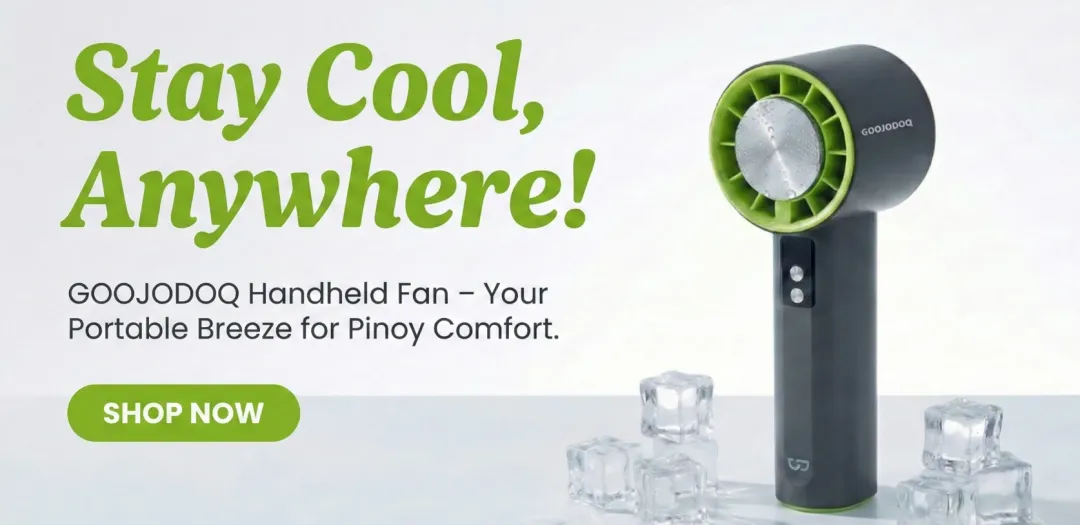
It entered Shopee in 2019 — a routine move. The real turning point came in 2022, when TikTok Shop rolled out across Southeast Asia. Indonesia had actually opened first, back in February 2021; Thailand, Vietnam, Malaysia and the Philippines launched together in April 2022, with Singapore following that June. GOOJODOQ’s store openings tracked that rollout almost exactly.
That was no coincidence. When a platform first opens, supply is scarce, and the platform pulls merchants in with organic traffic and subsidies. Customer acquisition costs in that window are in a different league from what they would be a few years later. The year GOOJODOQ scaled fastest, the entire channel’s GMV doubled — from USD 22.6 billion to USD 45.6 billion.
Demand was pushing from the other side, too. Southeast Asia’s six biggest markets are home to more than 600 million people, over 60% of them under 35. Tens of millions of motorbikes crowd Vietnam’s streets — here, a fan isn’t an upgrade purchase; it’s something people can’t get through the day without.
II. Not Better — Different
There aren’t many ways to compare portable fans: airflow, battery life, portability. All three had already been squeezed to their limits by the market. GOOJODOQ stopped competing head-on on specs — it made its fans merely “good enough” on those three counts and poured its energy into other dimensions.
On the spec sheet, brushless motors are now table stakes. The GFS023 currently sold on the official site claims 9,526 rpm, an airflow speed of 8.6 m/s, 100 speed settings, a 3,600mAh battery and 11.5 hours of runtime — still priced in the RMB 100 range.
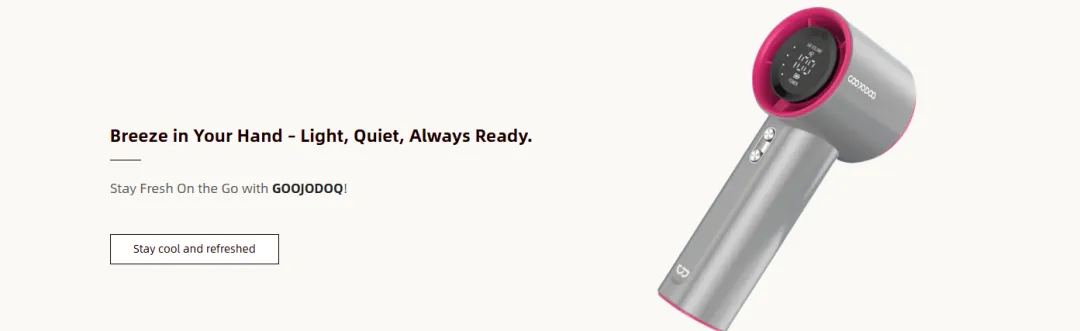
The real separation came from the differences you can see: semiconductor cooling, mist spray, an LED display, a built-in flashlight, paired with macaron colorways and a “Nailong” co-branded line that rolled out more than a dozen SKUs at once. The GFS025 went further still, adding a screen and a gimbal.
See is the operative word — because this brand’s true storefront is short video. Which brings us to the next part.
III. TikTok Content Commerce and Creator Marketing
A fan’s selling points are made for short video. Nearly every core spec — airflow, cooling, battery life, size — can be shown on camera: a gust lifting someone’s hair, condensation beading on the semiconductor cooling plate, a device unfolding from a pocket. Fifteen seconds is enough to complete the loop from demonstration to desire.
According to data from the Noxinfluencer platform, the brand partnered with more than 80,000 creators within a year — the vast majority of them on TikTok — and those collaborations generated nearly 1 billion views.
(Data from NoxInfluencer, We cordially invite you to try it out :Influencer Marketing Platform & Analytics Tool | NoxInfluencer)

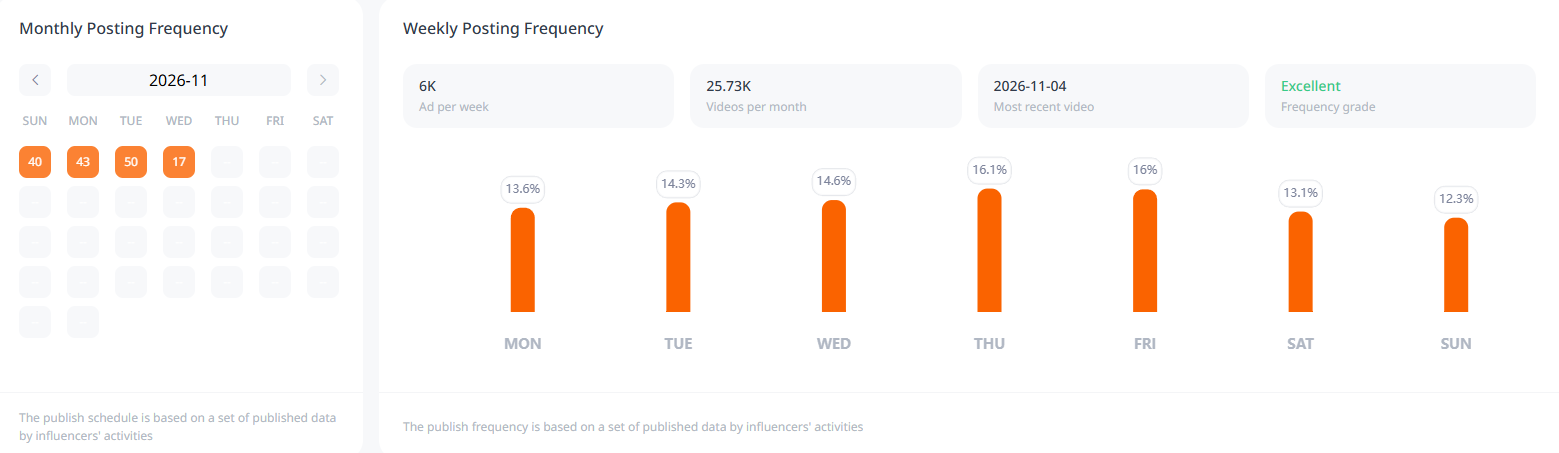
The brand’s publishing rhythm is just as striking: high-frequency, continuous, never pausing. It posts roughly 6,032 promotional videos a week — about 25,900 a month, or more than 800 pieces of content every single day. The content engine simply never stopped.
(Data from NoxInfluencer, We cordially invite you to try it out :Influencer Marketing Platform & Analytics Tool | NoxInfluencer)
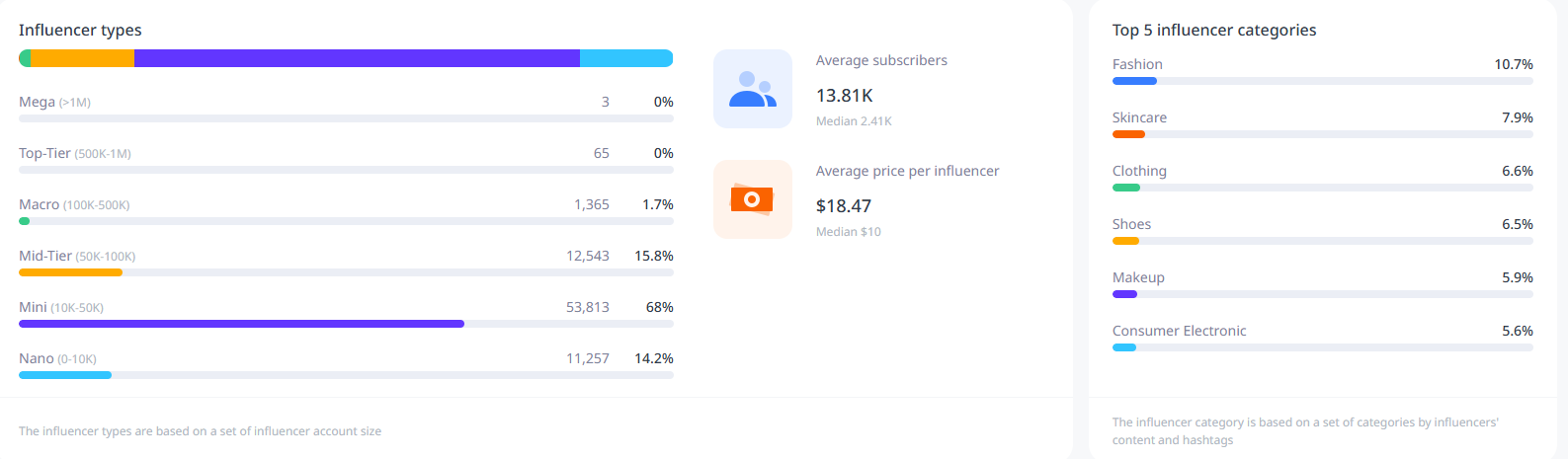
It works mostly with micro and small creators in electronics, fashion and smartphones. That’s a deliberate fit: as a consumer-electronics brand, GOOJODOQ speaks to audiences who already enjoy buying new gadgets, who understand the specs — and whose favorite creators explain them most clearly and credibly. Conversion follows naturally.
(Data from NoxInfluencer, We cordially invite you to try it out :Influencer Marketing Platform & Analytics Tool | NoxInfluencer)
The brand also runs its own content channels — separate accounts for different regions, plus intensive livestreaming. Its official accounts have amassed more than 3.9 million followers.
Creator distribution and owned channels run in parallel: one ensures exposure density, the other steadily builds first-party audience assets and reduces dependence on any single channel.
IV. Where the Warehouse Stands, the Market Begins
Closing a sale online is only the beginning. Whether a brand can deliver locally, on time, determines whether it truly takes root.
GOOJODOQ’s parent company has subsidiaries in Jakarta, Bangkok, Manila, Ho Chi Minh City and Kuala Lumpur — each with its own warehouse and local creator team. On the Philippine site, the product page lists Manila as the shipping origin. It’s an easy detail to overlook, and it says everything: stock in-country means shorter delivery times, fewer lost parcels, steadier shop ratings — and a platform willing to keep sending traffic.
There were some less conventional moves, too. The product landed on shelves at Lotte Mart in Vietnam. During Thailand’s Loy Krathong festival, the brand partnered with Chulalongkorn University on a five-day campus booth, donating revenue from co-branded merchandise to the university’s affiliated primary school. And at the Malaysian Independent Film Festival, it set up a market stall in a shopping mall that draws over 10 million visitors a year.
None of these produced immediate GMV. What they solved was something trickier: making locals feel that this brand belongs here — not just a name that flashes past in a feed.
GOOJODOQ’s story answers a question every seller competing in a mature market eventually faces: how does a latecomer survive when everyone is fighting on price? Its experience can be distilled into a few interlocking judgments. None of them is mysterious on its own; the hard part is chaining them into one self-reinforcing system — the product feeds the content, the content drives the channel, and localization underwrites the conversion.
A RMB 114 fan blowing its way to RMB 1.1 billion was never about catching a lucky wave. It was about making every link in the category chain hard for anyone else to copy.
About Noxinfluencer
Noxinfluencer is the world’s most-visited influencer marketing engine, helping brands precisely match with creators worldwide, manage outreach and collaboration, monitor campaign performance, and build efficient brand-creator partnerships.
